
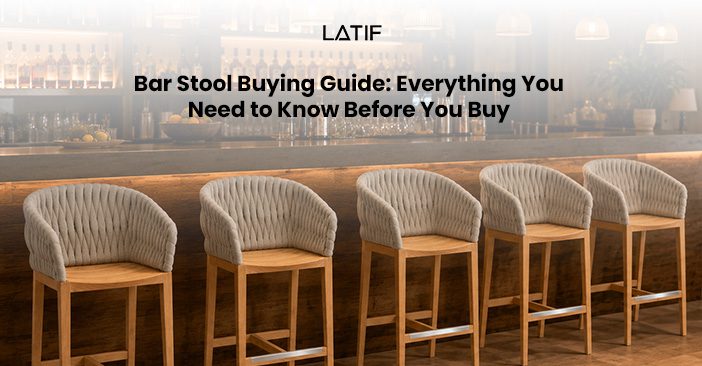
This bar stool buying guide covers every decision you need to make before purchasing, from height and back type to material, swivel, and outdoor performance. Buying a bar stool sounds straightforward until you stand in a showroom or scroll through a catalog and realise the options are far more varied than expected. Height, material, backrest, footrest, swivel, indoor vs outdoor, residential vs commercial. Each decision affects how the stool looks, how long it lasts, and how comfortable it feels after an hour of sitting.
By the end of this guide, you will know exactly what to look for and which Latif Living bar stool options suit your space.

Start Here: What Is a Bar Stool Actually For?
Before comparing products, define how you plan to use the stool. This single question eliminates most of the wrong options immediately.
A bar stool serves as seating at a raised surface. That surface is typically a bar counter, a kitchen island, a high dining table, or an outdoor bar. The height of that surface determines the height of the stool you need. Everything else, material, style, back or backless, follows from there.
For example, a stool for a home kitchen island has different requirements than a stool for a hotel rooftop bar. One prioritises daily comfort and fits a domestic aesthetic. The other prioritises durability, weather resistance, and visual consistency across 40 identical pieces.
Step 1: Get the Height Right
Height is the most important technical decision in bar stool buying. Get this wrong and the stool is unusable regardless of how good it looks.
How to Calculate the Right Height
Measure the height of your counter or bar surface from the floor. Then subtract 25 to 30 centimetres. The result is the seat height you need. This gap gives the sitter comfortable knee clearance and a natural posture.
There are three standard bar stool height categories.
Counter height stools have a seat height of 56 to 66 centimetres. These pair with standard kitchen counters and low bar counters that measure 85 to 95 centimetres from the floor. This is the most common height for residential kitchen islands.
Bar height stools have a seat height of 66 to 76 centimetres. These suit standard bar counters that measure 100 to 110 centimetres from the floor. Most commercial bar setups and elevated kitchen islands use this height.
Extra tall or spectator height stools have a seat height of 76 to 90 centimetres. These suit very high surfaces such as home theatre counters or custom commercial bars above 115 centimetres.
Measure Before You Buy
Do not guess. Measure your counter with a tape measure before ordering. A stool that sits 5 centimetres too low forces the sitter to hunch forward. A stool 5 centimetres too high pushes the knees against the underside of the counter. Both are uncomfortable enough to make the stool unwanted after the first week.
Step 2: Choose Between Backless, Low Back, and Full Back
This decision affects both comfort and visual impact.
Backless Bar Stools
Backless stools offer the most compact profile. They slide fully under the counter when not in use, which keeps the space looking clean. They also allow more flexibility in terms of how the sitter positions themselves, as there is no backrest dictating posture.
However, backless stools are less comfortable for extended sitting. After 30 to 45 minutes, the lack of back support becomes noticeable. For quick meals or casual perching at a breakfast bar, backless works well. For long evenings at a restaurant counter or home bar, a backrest becomes important.
Low Back Bar Stools
Low back stools provide support for the lower back without the visual bulk of a full high back. They slide partially under the counter. They balance comfort and aesthetics well, which makes them popular for both residential and commercial settings.
Full Back Bar Stools
Full back stools offer the most support and the most visual presence. They suit settings where the sitter plans to stay for an extended period, such as a dining bar, a work counter, or a hotel lobby bar where guests linger.
Full back stools, however, do not slide under the counter and take up more visual space. In tight or small kitchens, they can make the space feel crowded.
Step 3: Decide on Swivel vs Fixed
Fixed Bar Stools
Fixed stools do not rotate. They are stable, simpler in construction, and typically lighter. For outdoor use, fixed stools handle wind and movement better than swivel stools with rotating mechanisms. They also cost less, as there are no moving parts to manufacture or maintain.
Swivel Bar Stools
Swivel stools rotate 360 degrees. They make it easier to get on and off the stool and allow the sitter to turn to face different parts of the room without shifting the stool. This is particularly useful at home bars where the sitter may want to face the TV, the kitchen, or a conversation simultaneously.
However, swivel mechanisms add mechanical complexity. In outdoor settings, the mechanism can accumulate dirt and moisture over time, which affects smooth rotation. For indoor residential use, swivel is a genuine convenience. For outdoor commercial use, fixed is the more durable choice.
Step 4: Select the Right Material for Your Setting
Material selection in bar stools follows the same logic as all outdoor vs indoor furniture decisions. The environment determines the right material.
Teak
Teak bar stools suit both indoor and outdoor settings. Teak’s natural oil content repels moisture and resists insect damage, which makes it one of the few natural woods that genuinely performs outdoors without treatment. FSC-certified teak from Perhutani’s Indonesian plantations is the benchmark for quality and sustainability.
Indoors, teak adds a warm, natural material quality that suits contemporary tropical, Scandinavian-influenced, and resort aesthetics. Outdoors, teak handles tropical humidity, rain, and sun exposure without warping or degrading.
Powder-Coated Aluminium
Aluminium bar stool frames are lightweight, rust-proof, and easy to clean. Powder coating adds colour and an additional layer of UV and corrosion protection. This makes aluminium the dominant frame material for outdoor commercial bar stools in poolside, beachfront, and rooftop settings.
For high-volume commercial environments such as hotel bars, restaurant terraces, and beach clubs, aluminium-frame stools handle heavy daily use without maintenance demands.
All-Weather Rope Weaving
Rope-woven bar stools combine an aluminium frame with polypropylene rope seat and back construction. UV-stabilised polypropylene rope handles outdoor conditions well, resisting fading and moisture absorption. The weaving pattern creates a tactile, handcrafted surface that reads as premium in both photographs and in person.
Furthermore, rope-woven stools suit the contemporary tropical aesthetic that defines Bali’s hospitality design scene, which is why they appear frequently in hotel rooftop bars and outdoor restaurant terraces across Southeast Asia, Australia, and Europe.
Wicker and Synthetic Rattan
Wicker bar stools in HDPE synthetic resin fibre offer a natural, warm appearance with full outdoor performance. Good-quality HDPE wicker uses Clariant UV-protective additives that prevent fading and fibre degradation. As a result, synthetic wicker looks similar to natural rattan but performs far better in moisture-heavy environments.
Natural rattan, in contrast, is better suited to dry indoor settings. It absorbs moisture and weakens over time when exposed to outdoor humidity or direct rain.
Solid Wood (Non-Teak)
For indoor residential use, solid hardwood bar stools in oak, walnut, or rubber wood offer good durability and a range of finish options. These, however, should not go outdoors in tropical or coastal environments, as non-teak hardwoods lack teak’s natural moisture and insect resistance.
Step 5: Consider the Footrest
A footrest is a small detail that significantly affects comfort on a bar stool. Without a footrest, the sitter’s legs hang unsupported, which creates discomfort and fatigue fairly quickly, particularly for shorter users.
Look for a stool with a fixed footrest rail positioned at a comfortable height. A footrest at approximately 20 to 25 centimetres below the seat height suits most adults. For children or shorter users, a lower footrest position is preferable.
Moreover, the footrest material matters in commercial settings. A chrome or stainless-steel footrest rail handles heavy shoe contact well and cleans easily. Wooden footrests can show wear marks over time in high-traffic commercial environments.
Step 6: Match the Stool to Your Space
Beyond height and material, the stool needs to fit the visual character of its setting.
For modern and contemporary spaces, clean-line aluminium or rope-woven stools in neutral tones work well. They do not compete with other design elements and photograph cleanly.
For tropical, resort, and Balinese-inspired spaces, teak and rope combinations or wicker stools add natural material warmth. They reinforce the aesthetic direction of the space rather than sitting neutrally within it.
For industrial or rustic settings, darker powder-coat finishes on aluminium frames with raw-edge teak seats create a material contrast that suits the aesthetic.
For commercial spaces, prioritise stacking capability. Bar stools that stack allow staff to clear the counter area for cleaning or events. Not all bar stool designs offer stacking, so confirm this if it matters for your use case.
Step 7: For Outdoor Use, Check These Specifics
If your bar stools will live outdoors or partially outdoors, verify these four things before purchasing.
The frame material must be rust-proof. Powder-coated aluminium or stainless steel are the right choices. Untreated steel or iron will rust in coastal and tropical environments within months.
The seat material must handle moisture. Rope weaving, sling fabric, or synthetic wicker all drain and dry. Upholstered seats with standard foam and fabric will absorb moisture and develop mould.
UV protection must be explicit. Ask whether the material uses UV-stabilised additives. Unstabilised synthetic materials fade visibly within one to two seasons of sun exposure.
Confirm the footrest material handles outdoor conditions. A chrome or powder-coated steel footrest handles outdoor use well. Wooden footrests on bar stools placed in wet outdoor environments require more maintenance.
Bar Stool Recommendations from Latif Living
Latif Living’s Dining and Bar Collection includes a wide range of bar stools suited to outdoor commercial settings, tropical residences, and hospitality projects. Their bar stools use powder-coated aluminium frames, FSC-certified teak, all-weather rope, and synthetic wicker, all built to the export-grade standards that their hotel and resort buyers require globally.
Here are key bar stool options from the collection.
Athens Bar Stool
A rope-woven bar stool on a powder-coated aluminium frame in dark navy. The woven backrest and seat create a clean, contemporary profile. The dark frame and rope combination suits modern outdoor bar settings, rooftop bars, and contemporary tropical interiors. Additionally, the aluminium frame handles poolside and coastal environments without corrosion.
Bajo Bar Stool
A high-back bar stool with woven seat construction on a powder-coated aluminium frame. The Bajo offers full back support and a generous seat, making it comfortable for extended sitting at commercial bar counters. It suits hotel rooftop bars and restaurant counter seating where guests spend longer sessions.
Colmar Bar Stool
A rope-woven bar stool on a solid teak frame. The teak legs add natural material warmth that distinguishes this stool from all-aluminium options. The rope back and seat provide outdoor-grade performance. Furthermore, the FSC-certified teak suits buyers who require sustainable timber sourcing for their project specifications.
Oxford Bar Stool
A wicker-woven bar stool on a powder-coated aluminium frame. The warm wicker tone creates a natural, resort-adjacent aesthetic. It suits tropical outdoor bars, beachfront settings, and boutique hotel bar areas where the natural material aesthetic aligns with the property’s design direction.
Miami Bar Stool
A rope-woven bar stool on a solid teak frame in a dark contrasting rope tone. The combination of dark rope and natural teak creates a strong visual contrast that reads as intentional and premium. As a result, the Miami works well in upscale outdoor bar settings and villa terraces where the bar stool contributes to the space’s overall character.
Malibu Bar Stool
A premium bar stool with a twisted rope weaving pattern and solid teak legs. The twisted rope creates a denser, more textured surface than standard rope weaving, which adds tactile and visual richness. The Malibu sits at the top of the collection’s bar stool range and suits luxury hotel bars, villa outdoor bars, and boutique hospitality projects where material quality is a primary specification.
Ibiza Rope Bar Stool
A rope-woven bar stool on a solid teak frame with a natural rope tone. The light teak frame and warm rope colour create a soft, natural aesthetic that suits tropical and resort settings. In addition, the teak frame adds material warmth without the visual weight of a full upholstered back.
Dublin Bar Stool
A high-back bar stool with rope weaving on a teak frame. The Dublin has a taller back than most options in the collection, which provides more upper back support for extended sitting. It is a practical choice for bar counter settings where guests plan to stay for full meals or long social occasions.
Bar Stool Tables at Latif Living
Latif Living also carries bar tables that pair with their bar stool collection. These include:
- Kansas Bar Table, a rope-based pedestal table with a teak top.
- Jimbaran Bar Table , a round teak top table on teak legs.
- Dublin Bar Table, a rectangular aluminium-frame bar table with a teak surface.
All three handle outdoor conditions and suit the same tropical and contemporary hospitality aesthetics as the bar stools.
Find Your Bar Stool at Latif Living
Visit either Latif Living showroom in Bali to see the full bar stool and bar table collection in person. Test the seat height against your counter dimension, assess the material finish, and discuss which stool suits your space and volume requirements with their team.
Latif Living Sanur Jl. By Pass Ngurah Rai No.125 X, Sanur, Denpasar Selatan, Bali +62 811-3886-034