
Learning how to care for teak outdoor furniture properly is one of the most worthwhile things you can do to protect a significant furniture investment. Teak is one of the most durable natural materials available for outdoor use. However, many owners make maintenance decisions based on incomplete information, either over-treating the wood unnecessarily or leaving it without any care at all and then wondering why it develops surface mould or staining in a tropical climate.
This guide covers why teak changes colour over time, when to let it weather naturally versus when to maintain its original tone, how to clean mould and algae in humid climates, and the most common mistakes teak furniture owners make.
Why Teak Is Exceptionally Suited to Outdoor Use
Before covering maintenance, it helps to understand what makes teak different from other outdoor woods. Teak contains high levels of natural silica and teak oil within its grain structure. These properties give it a set of performance characteristics that most other timber species simply do not have.
Teak repels moisture at the cellular level. Unlike softwoods and many other hardwoods that absorb water and expand or contract with humidity changes, teak’s natural oil content prevents moisture penetration. As a result, teak does not warp, crack, or split through the wet-dry cycles that tropical and coastal climates impose repeatedly on outdoor furniture.
Teak resists insects and fungi naturally. The same oil content that repels moisture also deters termites and other wood-boring insects. Furthermore, teak’s density makes it structurally resistant to the surface penetration that allows fungal growth to establish in softer, more porous timbers.
Teak is one of the heaviest commercially available furniture woods, with a density that contributes directly to its structural durability. A teak dining table does not flex or wobble after years of outdoor use in the way that lower-density alternatives do.
For these reasons, FSC-certified teak from Indonesia’s Perhutani plantations has become the global benchmark for premium outdoor furniture. However, even the most durable material benefits from informed care.
Why Teak Turns Silver-Grey: Understanding Natural Weathering
The most common question teak furniture owners ask is why their furniture changes colour. New teak is a warm honey-gold tone. Over time, outdoor exposure causes it to shift through various brown tones and eventually settle into a silver-grey patina. Many owners interpret this as damage or degradation. In fact, it is a natural and harmless weathering process.
The colour change happens because of UV exposure. Ultraviolet radiation breaks down the lignin in the wood’s surface cells. Lignin is the organic compound that gives wood its warm golden pigmentation. As UV degrades the surface lignin, the grey cellulose fibres beneath become visible. The silver-grey patina is simply the colour of teak’s cellulose structure rather than its surface lignin.
Importantly, this colour change is entirely superficial. The structural integrity, moisture resistance, and natural oil content of the wood below the surface remain fully intact. Therefore, silver-grey teak is not damaged teak. It is simply teak that has been left to weather naturally.
The silver-grey patina develops fully over 9 to 12 months of outdoor exposure. Once established, it stabilises and remains consistent as long as the wood stays clean. Many designers and property owners actually prefer this silver-grey tone because it suits a contemporary, understated outdoor aesthetic. Furthermore, it requires no maintenance to achieve or maintain.
Natural Weathering vs Maintaining the Golden Tone
This is the fundamental care decision for every teak furniture owner. Both approaches are valid. The right choice depends on the aesthetic you want and the maintenance effort you are willing to invest.
Letting Teak Weather Naturally
If you prefer the silver-grey patina, the correct approach is to do nothing proactive in terms of colour maintenance. Clean the teak outdoor furniture regularly to prevent organic debris from accumulating. Remove mould promptly if it appears. However, do not apply teak oil, as this will slow or interrupt the weathering process.
Natural weathering suits owners who want minimal maintenance and a contemporary outdoor aesthetic. The furniture looks intentional in its grey state. It does not require seasonal treatment. It ages consistently and gracefully without intervention.
The only ongoing requirement is cleaning. Unclean teak that accumulates organic debris in a tropical climate will develop surface mould on the debris layer, even though the teak itself resists fungal penetration. Consequently, regular cleaning is the primary maintenance task for naturally weathered teak.
Maintaining the Warm Golden Tone
If you prefer to keep the honey-gold colour, teak oil is the standard maintenance product. Teak oil penetrates the surface wood cells and replenishes the natural oil content that UV exposure gradually depletes. It also temporarily re-saturates the lignin, restoring the warm amber colour.
However, several important points of oil application as a part of care for teak outdoor furniture.
First, teak oil does not permanently prevent weathering. It slows the process. Reapplication is required every 3 to 6 months in tropical climates where UV exposure is intense and year-round. This means maintaining the golden tone requires ongoing seasonal effort.
Second, teak oil applied to already-greyed teak first requires cleaning and sanding. You cannot simply apply oil to a silver surface and expect it to restore full golden colour. The surface lignin has already degraded and needs to be removed with a teak cleaner and light sanding before oil penetrates effectively.
Third, over-application of teak oil causes problems. Excess oil that does not penetrate into the wood sits on the surface, becomes sticky, and attracts dust and organic debris. This actually increases the conditions for surface mould growth rather than preventing it.
The correct oil application process is to clean and care the teak outdoor furniture thoroughly, allow it to dry completely for 24 to 48 hours in sun, apply a thin even coat of teak oil with a soft cloth along the grain, allow absorption for 30 minutes, then wipe off any unabsorbed excess before it dries on the surface.
How to Clean for Teak Outdoor Furniture in Humid Tropical Climates
Bali’s climate creates specific cleaning challenges for teak furniture. High humidity, frequent rain, and warm temperatures create ideal conditions for surface mould, algae, and green organic growth to develop on outdoor teak, particularly on pieces with less sun exposure.
Basic Regular Cleaning
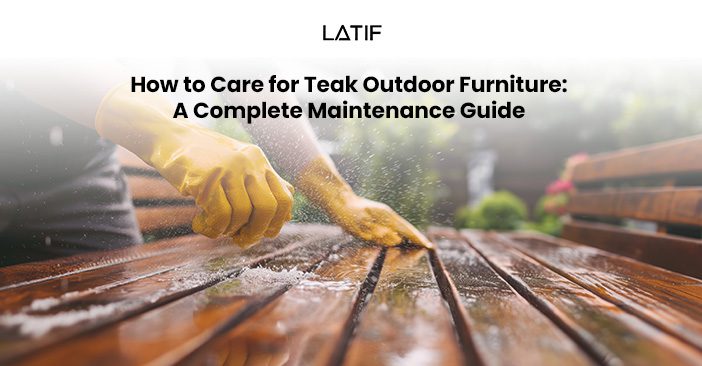
Regular cleaning is the most important maintenance habit for teak furniture in tropical climates. A monthly clean prevents the organic buildup that allows mould and algae to establish.
What you need to care for teak outdoor furniture: Warm water, mild dish soap, a soft-bristle brush, and clean rinse water.
Step 1: Rinse the furniture with clean water to wet the surface and loosen surface debris.
Step 2: Apply warm soapy water and scrub along the grain with a soft-bristle brush. Scrubbing along the grain cleans effectively without raising the wood fibres. Scrubbing across the grain opens the surface and increases moisture absorption.
Step 3: Rinse thoroughly with clean water. Ensure all soap residue is removed from joints and crevices.
Step 4: Allow to dry completely in sunlight before applying any oil treatment or returning cushions to the piece.
Removing Mould and Algae from Teak
Surface mould on teak typically appears as dark grey or green patches, particularly in shaded spots, on the underside of surfaces, and in joints where moisture accumulates. Algae appears as a greenish film on surfaces that stay damp.
For light mould and algae, the soapy water cleaning process above is often sufficient. However, for established mould or algae, a more targeted approach works better.
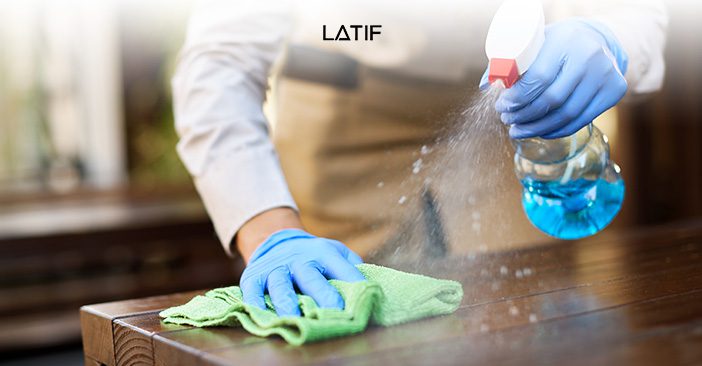
Vinegar solution: Mix equal parts white vinegar and warm water. Apply to affected areas with a soft brush, scrub gently along the grain, and allow to sit for 5 to 10 minutes before rinsing. White vinegar kills surface mould without damaging teak or removing its natural oil. It is the safest and most effective home-remedy approach for teak mould in tropical settings.
Diluted bleach: For severe mould that does not respond to vinegar, a diluted solution of one part bleach to ten parts water removes established mould effectively. However, bleach dries out the wood surface and strips natural oil. Therefore, always follow a bleach treatment with a complete rinse, full drying, and then teak oil application to replenish the surface oil content.
Commercial teak cleaner: Specialist two-part teak cleaning systems are available from marine and outdoor furniture suppliers. Part one is an oxalic acid-based cleaner that removes mould, stains, and greying. Part two is a neutraliser. These systems restore teak to near-new appearance but require more effort and cost than home remedies. They are worth using before reapplying teak oil to heavily weathered or stained furniture.
Removing Green Algae in Particular
Bali’s rainy season creates conditions where green algae establishes quickly on horizontal teak surfaces including table tops and bench surfaces that collect standing water. A solution of three parts water to one part white vinegar applied with a soft brush removes algae effectively. For recurring algae, improving drainage around the furniture and ensuring it receives some direct sunlight reduces the conditions that algae needs to establish.
Sanding Teak Furniture
Sanding removes the greyed surface layer from weathered teak, restoring the warm timber tone below. It is necessary before applying teak oil to grey teak, and it is the most effective way to restore a visually consistent surface after years of outdoor exposure.
Use 120-grit sandpaper for initial sanding and 220-grit for finishing. Always sand along the grain. Sanding across the grain creates visible scratch marks that become more pronounced when oil is applied.
After sanding, wipe the surface with a clean dry cloth to remove all dust before applying teak oil or leaving the freshly sanded surface to begin the weathering process again.
Sanding removes a small amount of wood from the surface with each session. Consequently, it should not be done more frequently than necessary. Furniture that is simply left to weather naturally without oil treatment does not require sanding at all. Sanding is primarily for owners who want to restore the golden tone after the wood has greyed.
Common Teak Outdoor Furniture Care Mistakes
Many teak outdoor furniture owners make avoidable mistakes that either damage the furniture, waste maintenance effort, or create the conditions for the problems they are trying to prevent.
Applying teak oil to wet or damp wood. Oil does not penetrate wet wood cells. It sits on the surface, seals in the moisture, and creates ideal conditions for mould growth under the oil film. Always allow teak to dry completely, typically 24 to 48 hours in sunlight, before applying any oil.
Over-applying teak oil. Excess oil that does not absorb into the wood sits on the surface and becomes a sticky residue that attracts organic debris. Apply thin coats and wipe off all unabsorbed oil within 30 minutes of application.
Using a pressure washer on teak. High-pressure water raises the wood grain, strips natural oil, and opens the surface fibres to moisture penetration. This accelerates future weathering and mould growth. A soft brush and garden hose provide sufficient cleaning pressure for teak furniture.
Painting or varnishing teak furniture. Paint and varnish sit on the surface of teak rather than penetrating it. As teak’s natural oils rise to the surface over time, they push the paint or varnish off from beneath, causing peeling. Teak simply does not bond well with surface coatings. Oil is the correct product for teak. Paint and varnish belong on other wood species, not teak.
Leaving organic debris in joints and crevices. Joints, screw holes, and carved details collect leaves, dirt, and organic debris that hold moisture and give mould and algae a food source. Regular cleaning that addresses these areas specifically prevents the organic buildup that teak itself resists but its debris accumulation does not.
Storing teak in enclosed, poorly ventilated spaces. Teak furniture stored in humid enclosed areas without airflow develops surface mould on its organic debris more readily than furniture left in open air. If you store teak during periods of non-use, ensure the storage space has adequate ventilation. Alternatively, leave teak furniture in place outdoors with a breathable furniture cover that protects against debris accumulation while allowing airflow.
Using steel wool or abrasive pads on teak. Steel wool leaves iron particles embedded in the wood surface that rust and create permanent dark staining. Use only soft brushes or soft cloths on teak furniture.
Teak Outdoor Furniture Care Summary by Climate Condition
For Bali’s tropical climate specifically, the following schedule covers the maintenance requirements for most teak outdoor furniture owners.
Monthly: Rinse with water and scrub with mild soapy water and a soft brush. Pay attention to joints, undersides, and any shaded areas.
Every 3 to 6 months: Inspect for mould, algae, or staining. Treat with vinegar solution if necessary. Apply teak oil if you are maintaining the golden tone. Allow 24 to 48 hours of drying before oil application.
Annually: Full inspection of joints, frame connections, and any hardware. Tighten loose fasteners. If the furniture has greyed and you want to restore the golden tone, clean thoroughly, sand lightly with 120-grit followed by 220-grit along the grain, and apply teak oil after complete drying.
At the start of wet season: Apply a thin coat of teak oil if maintaining the golden tone, as the wet season accelerates organic debris accumulation. Confirm cushions are using Sunbrella fabric or equivalent outdoor-grade covers. Store or cover cushions during extended rain periods.
Teak Outdoor Furniture from Latif Living
Latif Living uses FSC-certified teak from Perhutani’s sustainably managed Indonesian plantations across their sofa sets, dining tables, dining chairs, coffee tables, sun loungers, and daybeds. Their teak is kiln-dried before use, which removes excess moisture from the timber and reduces the risk of initial warping or cracking as the wood acclimatises to its outdoor environment.
The pieces hold the same teak that supplies Indonesia’s most established export manufacturers, certified against the SVLK timber legality standard that satisfies import regulations in the US, EU, and Australia.
Visit either Latif Living showroom in Bali to see the full teak furniture collection in person, assess the grain quality, and discuss which pieces suit your outdoor space.
Latif Living Sanur Jl. By Pass Ngurah Rai No.125 X, Sanur, Denpasar Selatan, Bali +62 811-3886-034