
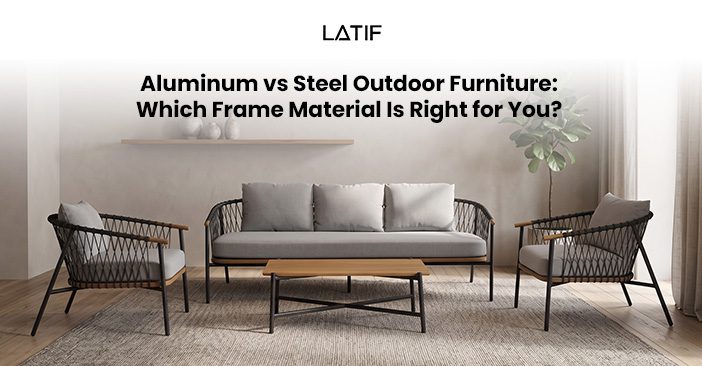
The aluminum vs steel outdoor furniture debate is one of the most practical decisions buyers face when choosing outdoor pieces for tropical, coastal, or high-humidity environments. Both materials are common in outdoor furniture frames. Both support rope weaving, sling fabric, wicker panels, and teak table tops. However, they perform very differently over time in demanding outdoor conditions, and choosing the wrong one for your environment leads to premature corrosion, structural failure, or excessive maintenance.
This guide breaks down the real differences between aluminum and steel outdoor furniture frames, explains what powder coating is and why quality varies dramatically between suppliers, tells you how to assess frame quality before buying, and explains why aluminum dominates the outdoor furniture market for tropical and coastal environments.
The Core Difference Between Aluminum vs Steel Outdoor Furniture: How Each Metal Handles Moisture
The most important performance difference between aluminum vs steel outdoor furniture comes down to one property: how each metal responds to moisture.
Steel is an iron alloy. When iron contacts water and oxygen simultaneously, it oxidises. This oxidation process produces iron oxide, which is rust. Rust is not a surface condition. It is a progressive structural degradation that continues through the metal as long as moisture and oxygen remain present. Consequently, an untreated steel frame in a tropical or coastal environment will begin to show rust at exposed points within months, and structural rust penetration can compromise frame integrity within a few years.
Aluminum, by contrast, does not rust. When aluminum contacts oxygen, it forms a thin layer of aluminum oxide on its surface. Unlike iron oxide, aluminum oxide is stable, adheres tightly to the metal surface, and actually prevents further oxidation from penetrating deeper into the material. Therefore, even a scratched or damaged aluminum frame does not continue to corrode the way a scratched steel frame does.
This fundamental difference in oxidation behaviour explains why aluminum dominates outdoor furniture manufacturing for tropical and coastal markets, and why it is the frame material that Latif Living uses across their export-grade outdoor furniture range.
Aluminum Outdoor Furniture: Strengths and Weaknesses
Strengths
Rust-proof by nature. As explained above, aluminum does not rust. In coastal environments with salt air, poolside settings with chlorine exposure, and tropical climates with year-round humidity and rain, aluminum frames maintain their structural and surface integrity without corrosion. This is not a coating-dependent property. It is intrinsic to the metal.
Lightweight. Aluminum is approximately one-third the weight of steel at equivalent volume. A full aluminum-frame outdoor sofa set moves easily for repositioning, cleaning access, or storm preparation. In commercial settings where staff reposition furniture daily, this weight difference significantly reduces physical effort and injury risk.
Low maintenance. An aluminum frame with sound powder coating requires only occasional wiping with a damp cloth. There is no seasonal painting, no rust treatment, and no protective coating application required. As a result, aluminum furniture suits buyers who want outdoor furniture that functions without demanding ongoing protective maintenance.
Excellent for rope weaving and wicker applications. Aluminum’s combination of strength and formability makes it the ideal frame for rope-woven and wicker outdoor furniture. Manufacturers bend, weld, and shape aluminum into complex frame geometries that support tight rope tension and wicker weaving patterns without the frame flexing or distorting.
Long lifespan in tropical conditions. With quality powder coating, aluminum frames last 15 to 25 years in tropical and coastal outdoor conditions. This places aluminum among the most durable frame materials for these environments.
Weaknesses
Dents more easily than steel. Aluminum is softer than steel. A significant impact, such as a heavy object falling on a frame rail, can dent aluminum where steel would resist. In residential settings, this rarely matters. In high-traffic commercial environments where furniture is moved frequently and roughly, it is worth noting.
Lower load capacity per unit weight. Steel is stronger than aluminum at equivalent cross-section. Manufacturers compensate for this by using thicker aluminum tubes in frames that need to support significant weight. However, very thin aluminum frame sections in low-cost outdoor furniture can flex and weaken over time under heavy or repeated loading.
Higher material cost. Raw aluminum costs more than raw steel. Consequently, quality aluminum frame furniture typically costs more than equivalent steel frame furniture at the point of purchase. However, the total cost over the lifespan of the piece almost always favours aluminum in outdoor environments, because steel frames require protective treatment, earlier replacement, or both.
Steel Outdoor Furniture: Strengths and Weaknesses
Strengths
Higher strength-to-section ratio. Steel is stronger than aluminum at the same cross-sectional dimension. This allows manufacturers to use thinner frame sections in steel pieces while maintaining structural rigidity. For furniture designs with very slender frame profiles, steel achieves a visual elegance that thick aluminum tubes cannot.
Lower material cost. Steel costs less than aluminum as a raw material. This makes steel an appealing option for large commercial projects where minimising upfront cost per unit is a priority.
Better impact resistance. Steel resists dents and deformation under impact better than aluminum. In environments where furniture faces rough handling, steel frames maintain their shape more consistently.
Weaknesses
Rusts in outdoor conditions without continuous protection. This is steel’s fundamental and unavoidable limitation for outdoor use. Any breach in the protective coating, whether from impact, scratching, or coating degradation over time, exposes the steel to moisture and oxygen. Rust then develops at that point and spreads progressively.
Heavier than aluminum. Steel furniture is significantly heavier, which creates challenges for repositioning, stacking, and managing in high-turnover commercial environments.
Requires more active maintenance. Steel outdoor furniture needs periodic inspection for coating damage and prompt treatment of any rust spots. This maintenance requirement is ongoing for the lifespan of the piece.
Performs poorly in coastal and tropical settings. Salt air is particularly aggressive against steel. In beachfront and coastal environments, even well-coated steel furniture develops rust at coating breach points faster than in inland settings. Therefore, steel is a significantly higher-risk specification for Bali’s coastal and tropical outdoor environments than aluminum.
Stainless Steel: The Exception
Stainless steel is a steel alloy with chromium content of at least 10.5 percent. The chromium forms a self-repairing passive oxide layer on the surface that prevents rust penetration. Consequently, stainless steel does not rust in the way that standard carbon steel does.
However, stainless steel has its own limitations for outdoor furniture applications. It is significantly more expensive than both standard steel and aluminum. It is heavier than aluminum. Furthermore, in marine and coastal environments with high chloride concentrations, even stainless steel can develop surface staining, a phenomenon called tea-staining, or in severe cases, pitting corrosion at grades below 316.
For most residential and commercial outdoor furniture applications, powder-coated aluminum provides an equivalent corrosion resistance profile to stainless steel at lower cost and lighter weight. Stainless steel appears most frequently in marine hardware, high-end commercial kitchen equipment, and premium architectural applications rather than in standard outdoor furniture frames.
What Is Powder Coating and Why Does Quality Vary?
Most of aluminum vs steel outdoor furniture frames applied with powder coating as finishing process. Understanding it helps buyers distinguish quality frames from inferior ones.
The Powder Coating Process
In powder coating, electrostatically charged dry powder particles bond to the grounded metal frame surface. The coated frame then goes into a curing oven at approximately 180 to 200 degrees Celsius. The heat melts the powder and causes it to flow into a smooth, even layer that bonds chemically to the metal surface. The result, when done correctly, is a harder, more durable, and more corrosion-resistant finish than liquid paint.
Quality powder coating produces a smooth, even surface with consistent colour and thickness across the full frame. The cured coating bonds tightly to the metal, resists chipping under normal impact, and protects the underlying metal from moisture ingress even in coastal and tropical conditions.
Why Powder Coating Quality Varies
The powder coating process has several stages where quality shortcuts create inferior results. These include inadequate surface preparation before coating, insufficient powder thickness, undercuring in the oven, and poor powder formulation without adequate UV-stabilising additives.
Surface preparation is the most critical stage. The metal must be cleaned, degreased, and treated with a conversion coating (typically chromate or phosphate for aluminum) before powder is applied. This treatment improves adhesion between the powder and the metal surface. Skipping or abbreviating this stage produces powder coat that peels or chips at the bond interface rather than at the surface, exposing the underlying metal quickly.
Powder thickness determines how much protection the coating provides. Quality outdoor furniture powder coat measures 60 to 80 microns in thickness. Thin coatings of 20 to 30 microns chip and penetrate more easily. However, powder that is too thick can crack at bending points and joints.
UV-stabilised powder formulation matters specifically for outdoor furniture. Powder coat without UV stabilisers fades and becomes chalky under prolonged sun exposure. Quality outdoor furniture manufacturers specify UV-stabilised powder formulations that maintain colour and surface integrity for 10 or more years.
How to Check Frame Quality Before Buying
Physically assessing frame quality at the point of purchase prevents the expensive mistake of discovering poor construction after the furniture has been outdoors for 18 months.
Run your hand over the frame surface. Quality powder coat is smooth and even. Rough, textured, or bumpy surfaces indicate either poor surface preparation, inadequate powder thickness, or inconsistent application. Additionally, check for visible drip marks, which indicate that liquid paint was used rather than true powder coating.
Check joints and welds. Look at the joints where frame sections connect. Quality welds are smooth, consistent, and fully fused. Poor welds show gaps, rough surface texture, or lack of penetration. Furthermore, check that joints show no rust or corrosion staining, which would indicate existing moisture ingress through poor coating at the joint.
Test for frame flex. Sit on the chair or apply downward pressure to the frame. A quality aluminum frame should not flex noticeably under normal body weight. Excessive flex indicates thin wall tubing or insufficient frame cross-section. Both reduce the structural lifespan of the piece.
Inspect rope and wicker attachment points. The points where rope or wicker attaches to the frame are the highest-stress locations in the frame’s coating. Check these points for any existing coating damage, cracking, or bare metal exposure. These are where corrosion typically begins first on lower-quality frames.
Ask about powder coat thickness and UV stabilisation. A supplier who exports to demanding markets in North America, Europe, and Australia should be able to answer these questions directly. If they cannot specify the powder coat system they use, that is a relevant data point about their quality control approach.
Check for weight consistency. Pick up individual chairs and assess whether they feel appropriately solid. Excessively light chairs use very thin tube walls that reduce structural durability. Quality aluminum outdoor chairs feel solid without being as heavy as teak equivalents.
Which Is Better for Bali’s Climate: Aluminum vs Steel Outdoor Furniture?
For outdoor furniture in Bali’s tropical and coastal climate, aluminum is the correct specification in almost every case. The reasoning is straightforward.
Bali’s climate combines year-round high humidity, seasonal heavy rainfall, intense UV exposure, and salt air in coastal locations. All of these conditions are aggressive against steel. Humidity and rain provide constant moisture. Salt air provides chloride ions that accelerate electrochemical corrosion at any coating breach point. UV degrades coating formulations without UV stabilisers.
Aluminum handles all of these conditions without the progressive corrosion risk that steel carries. A quality powder-coated aluminum frame maintains its structural and surface integrity in Bali’s outdoor conditions for 15 to 25 years. A quality powder-coated steel frame requires ongoing inspection, prompt treatment of any coating damage, and typically full replacement within 5 to 10 years in comparable conditions.
Furthermore, aluminum’s lighter weight suits Bali’s outdoor furniture context specifically. Villa and hotel outdoor furniture in Bali gets repositioned frequently, moved for cleaning, rearranged for events, and sometimes stored during storm periods. Aluminum makes all of these tasks easier than steel.
Aluminum Frame Outdoor Furniture at Latif Living
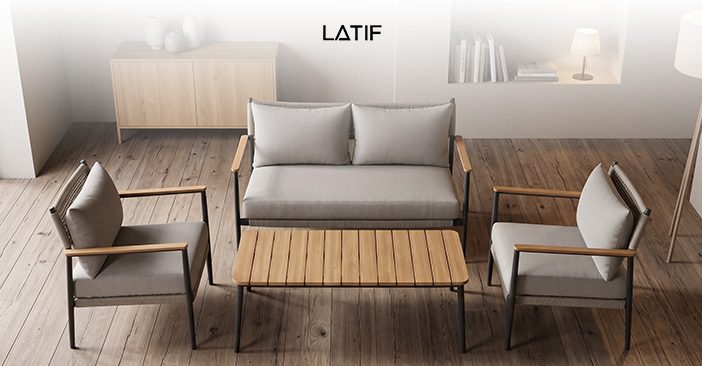
Latif Living uses powder-coated aluminum frames across their rope-woven, wicker, and sling furniture collections. Their aluminum frames go through proper surface preparation, UV-stabilised powder coat application, and oven curing at their Kediri factory before rope weaving or wicker construction begins. This sequencing is important: frame quality and coating integrity are established before the weaving process, so the finished piece arrives with a frame that is fully protected beneath the weave.
Their aluminum frame pieces cover sofa sets, dining chairs, bar stools, sun loungers, daybeds, and coffee tables. All ship to buyers across North America, Europe, Asia, and Oceania, meaning the frame specification meets the quality demands of buyers in markets where outdoor furniture performance is scrutinised carefully.
Visit either Latif Living showroom in Bali to assess aluminum frame quality in person: check the powder coat surface, test the frame rigidity, and inspect the joint quality before committing to any order.
Latif Living Sanur Jl. By Pass Ngurah Rai No.125 X, Sanur, Denpasar Selatan, Bali +62 811-3886-034