
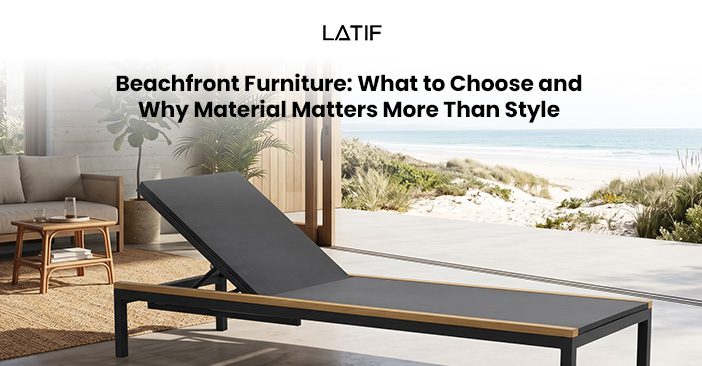
Beachfront furniture faces conditions that expose every material weakness within months. Salt air, sand abrasion, intense UV radiation, high humidity, and occasional direct wave or rain contact work together to degrade materials far faster in a beachfront environment than in any other outdoor setting. Consequently, furniture that performs well in a standard garden or covered terrace may fail visibly within one to two seasons when placed in a direct beachfront location.
This guide covers what makes beachfront furniture different from standard outdoor furniture, which materials genuinely perform in salt-air and high-UV environments, what to look for in each product category, and which Latif Living pieces suit beachfront residential and hospitality applications.
Why Beachfront Is the Harshest Outdoor Environment for Furniture
Most outdoor furniture buyers understand that pieces need to handle rain and sun. Fewer understand the additional stresses that beachfront locations add on top of standard outdoor conditions.
Salt Air Corrosion
Salt air carries microscopic chloride particles that settle on every exposed surface. When these particles combine with moisture, they form a saline solution on the surface of metals, fabrics, and synthetic materials. Chloride ions are particularly aggressive at penetrating protective coatings and initiating electrochemical corrosion in metals. As a result, steel frames that perform adequately in inland locations corrode significantly faster in beachfront settings. Even well-coated steel develops rust at coating breach points within months rather than years in direct salt air.
Aluminum does not rust. However, chloride ions can still attack aluminum oxide at high concentrations in marine environments, causing a form of surface pitting called galvanic corrosion. Quality powder-coated aluminum with a sound, thick coating resists this. Bare or poorly coated aluminum, however, develops visible surface oxidation in beachfront conditions.
Intensified UV Exposure
Sand and water both reflect UV radiation. A beachfront location therefore exposes furniture to both direct overhead UV from the sun and reflected UV from the sand and water surface simultaneously. This effectively doubles the UV dose that furniture receives compared to equivalent furniture in a standard garden setting. Consequently, materials without UV-stabilising additives fade twice as fast in beachfront locations.
Sand Abrasion
Sand is an abrasive material. Wind-carried sand particles create micro-scratches on furniture surfaces over time. On powder-coated frames, this abrasion progressively removes the protective coating at exposed points, creating entry points for moisture and salt. On fabric, sand abrasion wears through surface finishes and weakens fibre structure. Furthermore, sand accumulates in woven surfaces, joints, and crevices, trapping moisture and organic material that compounds corrosion and mould risk.
Heat Concentration
Beachfront locations typically lack the tree cover and shade structures that moderate temperatures in garden settings. Direct tropical sun on a beachfront raises surface temperatures on dark furniture significantly, accelerating the thermal component of UV-driven photodegradation. As a result, colour fading and coating degradation happen faster in exposed beachfront locations than in shaded outdoor settings with equivalent UV levels.
Which Materials Perform in Beachfront Environments
Powder-Coated Aluminum: The Standard Frame Choice
Aluminum does not rust, which makes it the dominant frame material for beachfront furniture globally. The aluminum oxide layer that forms naturally on aluminum’s surface is stable and self-repairing, meaning that even a scratch or chip does not trigger progressive corrosion the way it does in steel.
However, not all powder-coated aluminum performs equally in beachfront conditions. Quality matters significantly. The powder coat needs adequate thickness, typically 60 to 80 microns, UV-stabilising additives in the formulation, and proper surface pre-treatment of the aluminum before coating. Poor adhesion between the powder coat and the aluminum substrate creates the conditions for delamination under the mechanical stress that salt air and sand abrasion impose.
For beachfront furniture, specify aluminum frames with marine-grade powder coat where possible. This formulation adds additional corrosion inhibitors to the standard UV-stabilised coat.
FSC-Certified Teak: The Premium Natural Option
Teak’s natural oil and silica content give it a genuinely exceptional resistance profile for beachfront conditions. The oil repels moisture penetration. The silica resists insect damage and surface abrasion. The wood’s density prevents the structural weakening that moisture cycling causes in other timber species.
Furthermore, teak weathers consistently in beachfront environments. UV breaks down the surface lignin and produces the silver-grey patina that beachfront teak is known for. This weathering is even and gradual rather than patchy or unattractive. Teak furniture on a beachfront that has been left to weather naturally develops a consistent, attractive grey tone that many designers and property owners consider the defining aesthetic of quality beachfront furniture.
All-Weather Polypropylene Rope with Clariant UV Protection
UV-stabilised polypropylene rope handles beachfront conditions well. The Clariant UV-stabilising masterbatch incorporated during rope production converts UV radiation to heat before it can attack the polymer chains. Polypropylene does not absorb moisture, which means the rope does not swell, weaken, or develop the musty characteristics that natural fibre ropes develop in high-humidity salt-air environments.
Salt air does not degrade polypropylene at the material level. Sand accumulation in rope weave is the primary maintenance consideration. Regular rinsing with fresh water removes salt deposits and sand from rope weave surfaces.
HDPE Synthetic Wicker with Clariant UV Protection
HDPE synthetic wicker performs well in beachfront conditions for the same reasons as polypropylene rope. The Clariant UV protection prevents colour fading. The non-porous HDPE fibre does not absorb salt water or moisture. Salt air does not chemically attack the polymer.
The tight wicker weave pattern, however, accumulates sand and salt deposits more readily than rope weaving due to its smaller apertures. Consequently, beachfront synthetic wicker furniture benefits from more frequent fresh-water rinsing than comparable furniture in non-beachfront settings.
Phifertex Sling Fabric
For beachfront sun loungers and casual seating where quick-drying performance is the primary requirement, Phifertex sling fabric on an aluminum frame is the most practical specification. The PVC-coated polyester mesh is UV-resistant, salt-air resistant, and drains instantly when wet. Guest movement from the water directly to the lounger creates no meaningful moisture management problem with Phifertex sling. Furthermore, salt rinses off the open-weave surface easily with fresh water.
Sunbrella Cushion Fabric
Where cushioned seating is appropriate in beachfront settings, Sunbrella solution-dyed acrylic fabric provides the best available protection against the combined UV and salt-air exposure. The solution-dye process means the colour runs through every fibre rather than sitting on the surface, so UV and salt cannot remove it by attacking the surface layer. Additionally, Sunbrella resists mildew, which is a significant concern in the humid, salt-laden air of beachfront environments.
For fully exposed beachfront locations, managing cushions between uses is important even with Sunbrella fabric. The cushion covers handle outdoor conditions well, but the foam beneath benefits from protection during extended rain periods or overnight in salt-air environments. Custom furniture covers for cushioned beachfront pieces are a practical investment.
Materials to Avoid in Beachfront Settings
Standard carbon steel frames corrode rapidly in salt air regardless of coating quality, and should not be used in direct beachfront furniture.
Natural rattan deteriorates quickly in salt-air and high-humidity conditions. Salt deposits accelerate the breakdown of the natural fibre, and moisture absorption causes structural weakening.
MDF or engineered wood components in any furniture exposed to beachfront conditions will swell, delaminate, and fail within one season.
Standard polyester cushion fabric without solution dyeing fades significantly faster in beachfront UV conditions and develops mould more readily in the salt-air humidity.
Beachfront Furniture by Product Category
Sun Loungers for Beachfront Use
The sun lounger is the defining beachfront furniture piece. For fully exposed beach club and resort settings where loungers face direct sand, salt air, and UV from sunrise to sunset, sling loungers on aluminum frames are the most practical specification.
Phifertex sling drains instantly, requires no cushion management, and resists salt and UV without special treatment. Guests moving between the water and the lounger throughout the day create zero maintenance demand on a sling-seat piece.
For premium beachfront settings where appearance is a primary consideration alongside performance, teak-frame sling loungers offer the warmth of natural wood combined with the quick-dry practicality of sling. The teak frame requires periodic fresh-water rinsing to remove salt deposits that would otherwise accumulate in the grain over time.
Outdoor Sofa and Lounge Sets for Beachfront Terraces
Beachfront terraces and beach clubs typically need a lounge zone for guests who want to sit facing the water in a more social configuration than individual sun loungers provide. Rope-woven sofa sets on powder-coated aluminum frames suit this application.
For covered beachfront terraces, Sunbrella-cushioned sofa sets handle the salt-air environment well with regular cleaning. For open or semi-covered terraces, rope-woven seats without cushions are lower maintenance and more practical in environments where wind and salt air make cushion management labour-intensive.
Dining Sets for Beachfront Restaurants
Beachfront restaurant and bar dining furniture faces the combined stresses of commercial dining use, salt air, and UV simultaneously. Teak dining tables with powder-coated aluminum frames and rope-woven dining chairs provide a material combination that handles all three.
Teak table tops resist the daily cleaning with commercial products that restaurant operations require. Aluminum frame dining chairs do not corrode in salt air. Rope-woven dining chair backs and seats clean easily between covers with a damp cloth.
For beachfront bars where the furniture stays outdoors continuously, sling bar stools on teak or aluminum frames eliminate the cushion and upholstery management that standard bar seating would require.
Daybeds for Beach Clubs and Resort Pools
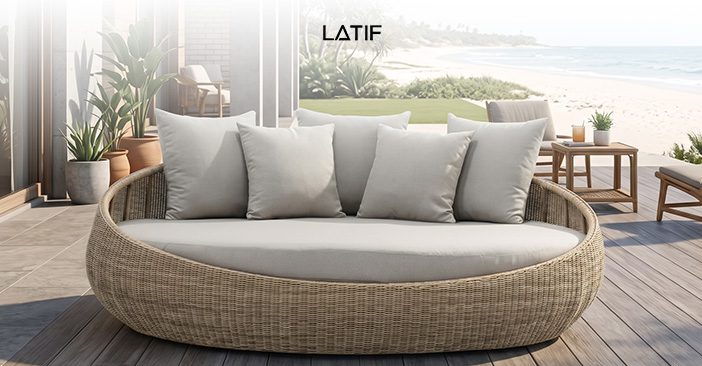
Round wicker daybeds and canopied daybeds at beach clubs and resort pool areas create the visual centrepiece that guests photograph and associate with the property’s identity. In beachfront settings, these pieces need to handle salt air, elevated UV, and occasional wind exposure.
HDPE synthetic wicker with Clariant UV protection is the appropriate material for the daybed shell. The wicker weave does not absorb moisture, resists UV degradation, and handles salt air without corrosion. Sunbrella-cushioned interiors provide the comfort and mould resistance that enclosed daybed cushions in humid beachfront environments require.
Maintenance Routine for Beachfront Furniture
Beachfront furniture needs more frequent maintenance than inland outdoor furniture because of the continuous salt and sand exposure. However, a straightforward routine handles this effectively.
Weekly fresh-water rinse. Salt deposits accumulate on all surfaces continuously in beachfront environments. A weekly rinse with fresh water removes salt before it concentrates and begins to attack surfaces. This single habit extends the lifespan of all beachfront furniture materials significantly.
Monthly soap clean. Once a month, clean all surfaces with mild soapy water and a soft brush. This removes accumulated organic debris, sand, and salt residue from woven surfaces and joints. Rinse completely and allow to dry in the open air.
Quarterly frame inspection. Inspect all powder-coated aluminum frames at joints, attachment points, and any areas where the coating may have been scratched or chipped. Address any coating damage immediately with touch-up paint or clear lacquer before salt air can establish corrosion at the breach point.
Seasonal teak treatment. For teak furniture in beachfront settings, inspect the wood surface every six months. Apply teak oil if maintaining the golden tone. For naturally weathered grey teak, a fresh-water rinse and light brushing removes salt residue from the grain surface.
Sunbrella cushion care. Clean Sunbrella cushion covers monthly with the mild soap solution and rinse thoroughly. Store cushions indoors or under covers during extended periods of non-use, particularly during storm season.
Beachfront Furniture from Latif Living
Latif Living manufactures outdoor furniture using the material specifications that beachfront environments demand. FSC-certified teak from Perhutani’s sustainable plantations. Powder-coated aluminum frames with UV-stabilised coating. Phifertex sling for pool and beachfront loungers. Sunbrella cushion fabric for upholstered pieces. Clariant UV-stabilising masterbatch in all HDPE wicker and polypropylene rope production.
Their products go to hotels, beach clubs, and resort properties across more than 100 countries, including coastal and beachfront properties in Australia, the Middle East, Southeast Asia, and Europe. This export track record reflects the fact that their material specifications genuinely perform in the demanding outdoor conditions that these markets impose.
Here are key pieces from Latif Living’s collection suited specifically to beachfront applications.
Bahamas Sun Lounger
Phifertex sling on a powder-coated aluminum frame with teak armrest accents. The most practical poolside and beachfront sun lounger in the collection. Zero moisture management required. Salt rinses off the sling with fresh water. The teak accents add visual warmth without requiring aluminium-only aesthetics.
Colbert Sun Lounger
Solid teak frame with a dark sling seat. For premium beachfront settings where teak warmth and the quick-dry performance of sling are both required. The FSC-certified teak handles salt-air exposure consistently.
Caledonia 200 cm Round Daybed
A large oval synthetic wicker daybed with generous cushioned interior. The HDPE wicker shell with Clariant UV protection resists the beachfront UV and salt-air combination. The enclosed form provides a sheltered lounging surface that partially shields guests from wind-carried sand.
Kuta Sofa Set
Rope-and-aluminum outdoor sofa set in dark charcoal. The all-weather rope with UV stabilisation handles beachfront conditions. The aluminum frame does not corrode in salt air. For covered beachfront terraces where a social lounge zone faces the water.
Gili Dining Chair
A wicker-woven dining chair on a powder-coated aluminum frame. Suitable for beachfront restaurant and bar settings where chairs need to handle salt air, daily repositioning, and commercial cleaning simultaneously.
Prague Sun Lounger
A rope-woven lounger on a solid teak frame. The combination of teak frame and all-weather rope creates a premium beachfront lounger aesthetic. The rope weave drains effectively and the teak frame weathers to a consistent silver-grey in salt-air environments, which many beachfront properties consider the signature aesthetic of quality teak furniture.
Find Beachfront Furniture at Latif Living
Visit either Latif Living showroom in Bali to assess material quality in person and discuss beachfront project requirements with their team.
Latif Living Sanur
Jl. By Pass Ngurah Rai No.125 X, Sanur, Denpasar Selatan, Bali
+62 811-3886-034