
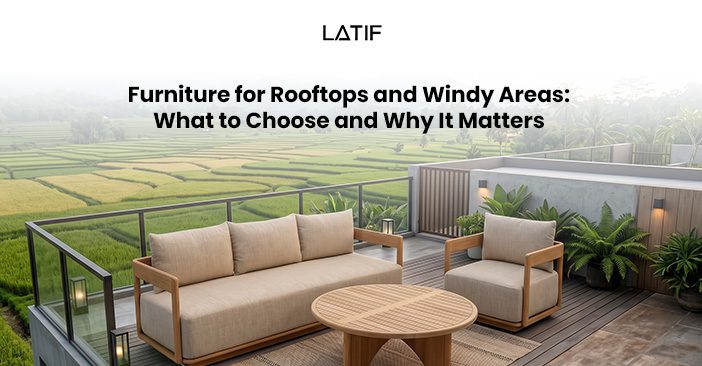
Choosing furniture for rooftops and windy areas requires a fundamentally different approach from standard outdoor furniture selection. Most outdoor furniture is designed to handle rain, sun, and humidity. However, wind introduces a set of structural and safety demands that those same pieces are not necessarily built to address.
A lightweight chair that sits perfectly on a sheltered terrace becomes a projectile on a rooftop in a 60 km/h gust. A large umbrella that provides welcome shade at ground level becomes a dangerous sail at elevation. A thin-walled aluminum frame that handles poolside conditions adequately may not withstand the lateral forces that sustained wind imposes on a rooftop installation.
This guide covers what makes rooftop and windy-area furniture different, which materials and construction features matter most, how to manage the specific challenges of elevated outdoor settings, and which Latif Living pieces suit these environments.
Why Rooftop and Windy Areas Create Unique Furniture Challenges
Wind speed increases with elevation. At ground level, surrounding buildings, trees, and terrain features create turbulence that slows wind and disrupts its flow. At rooftop level, these obstacles are largely absent. As a result, rooftop environments in urban areas regularly experience wind speeds 20 to 40 percent higher than ground level conditions in the same location.
Furthermore, wind at elevation is less predictable in direction. Ground-level wind tends to flow consistently along street corridors and between buildings. Rooftop wind comes from multiple directions, often shifting rapidly. Consequently, furniture on a rooftop faces lateral forces from changing angles rather than a consistent directional load.
Additionally, the combination of elevation, reduced shelter, and open sky means rooftop environments face more direct UV exposure and more pronounced temperature variation between day and night than equivalent ground-level outdoor spaces. These conditions compound the standard outdoor durability requirements with wind-specific structural demands.
Weight and Stability: The Core Requirement for Windy Area Furniture
The most important property of furniture for rooftops and windy areas is resistance to wind displacement. There are two ways to achieve this: through the furniture’s own weight and through anchoring or weighted bases.
Heavy Furniture as the First Line of Defence
Heavy furniture is inherently more wind-resistant than lightweight alternatives. A 15 kg teak dining chair resists displacement in moderate wind that would send a 5 kg aluminum chair sliding or tipping. For rooftop environments where furniture safety matters, weight is a genuine structural advantage rather than merely a logistical inconvenience.
Solid teak furniture is naturally heavy. A teak dining chair typically weighs 8 to 15 kg. A teak sofa set weighs 50 to 80 kg total. This mass keeps pieces grounded in moderate wind conditions without additional anchoring.
However, very heavy furniture also creates its own challenges. Moving heavy teak pieces for cleaning, reconfiguration, or storm preparation requires significant physical effort. For commercial rooftop bar and restaurant settings where furniture is repositioned daily, purely heavy furniture may not be the most practical solution.
Weighted Bases and Anchoring Systems
Some furniture categories, particularly umbrellas, shade structures, and large decorative pieces, require explicit anchoring or weighted bases regardless of their own weight. A standard umbrella in a 60 kg concrete base sits safely on a sheltered terrace. That same umbrella on a rooftop in sustained wind needs a significantly heavier base or a floor anchor point to remain stable.
For rooftop restaurant and bar settings, furniture anchoring systems that bolt through the deck surface to structural points beneath offer the most reliable wind resistance. However, these systems require professional installation and may not be appropriate for rental properties or temporary rooftop installations.
Best Materials for Rooftop and Windy Area Furniture
The right material choice for furniture in rooftops and windy areas determines both how long the piece lasts and how safely it stays in place during high winds.
Solid Teak
Solid teak is one of the best materials for rooftop furniture because it combines natural weight with weather resistance. Teak’s density provides the gravitational stability that resists wind displacement. Its natural oil content handles the intensified UV and moisture exposure that elevated outdoor environments impose.
Furthermore, teak’s weight is distributed throughout the piece evenly, which creates a low centre of gravity in seating pieces that reduces tipping risk compared to lighter furniture with a similar profile. A solid teak armchair with a wide base footprint and natural mass sits on a rooftop reliably in conditions that would move lighter alternatives.
For rooftop dining furniture in particular, solid teak tables and chairs provide the weight needed for stability without requiring anchoring systems.
Heavy-Gauge Powder-Coated Aluminum
Standard aluminum furniture is lightweight and therefore vulnerable to wind displacement. However, heavy-gauge aluminum, using thicker wall tubing and denser frame construction, produces pieces that weigh significantly more than standard aluminum alternatives while retaining corrosion resistance.
Furthermore, the stability of an aluminum piece depends on its footprint geometry as much as its weight. Wide-based designs with low centres of gravity resist tipping better than tall, narrow designs at equivalent weight. When choosing aluminum furniture for rooftop settings, look for pieces with broad leg bases, low seat profiles, and cross-bracing between frame elements.
For hospitality rooftop settings where staff need to move furniture regularly, heavy-gauge aluminum offers a practical balance between manageable weight and wind stability. It is significantly lighter than solid teak while still providing meaningfully better wind resistance than standard lightweight aluminum.
Rope-Woven Furniture with Aluminum Frames
Rope-woven furniture on heavy-gauge aluminum frames combines weather resistance with reasonable structural weight. The rope weaving itself has an unexpected wind advantage: it is permeable to air. Wind passes through the rope weave rather than building pressure against a solid surface. Consequently, rope-woven chair backs and sofa backs create less wind resistance than equivalent solid panel designs, which reduces the lateral force that wind exerts on the piece.
This permeability makes rope-woven furniture less prone to tipping in gusty conditions than equivalent solid-back or solid-panel designs at the same weight. A solid-panel chair acts like a sail: wind pressure builds against the full face. A rope-woven chair allows partial wind passage, reducing the effective sail area and the tipping moment.
Wicker Furniture
HDPE synthetic wicker has a similar permeability advantage to rope weaving for wind resistance. However, wicker furniture tends to be lighter than rope-woven equivalents at similar frame gauge, which somewhat offsets this advantage.
For wicker furniture on rooftops, the permeability of the wicker weave is a useful property, but the weight of the piece should be verified before purchase. Very lightweight wicker furniture, particularly pieces using thin resin fibre over standard-gauge aluminum frames, does not provide adequate wind stability on elevated exposed terraces.
What to Avoid on Rooftops and in Windy Areas
Lightweight folding chairs and tables. Folding furniture is designed for portability, not wind stability. The folding mechanism creates a lower structural rigidity than fixed-frame construction. In wind, folding chairs collapse and become uncontrolled.
Large flat-surface tables without anchoring. A large dining table with a solid flat top creates a significant sail area in crosswind. Without anchoring or sufficient weight, these move and tip in sustained wind. For rooftop dining tables, specify either very heavy solid teak tops or slatted and perforated tops that allow wind passage.
Standard umbrella bases. A 25 kg concrete umbrella base provides adequate stability at ground level. On a rooftop, where wind speed is higher and the direction unpredictable, the same umbrella in the same base becomes unsafe. Either use significantly heavier bases, cantilever umbrellas with structural anchoring, or design shade into the rooftop architecture rather than relying on freestanding umbrellas.
Tall, narrow, lightweight decorative pieces. Planters, decorative screens, lanterns, and tall decorative furniture pieces with narrow bases and high profiles are highly susceptible to wind tipping. Any decorative element above waist height needs either significant weight or positive anchoring in a rooftop setting.
Umbrella and Shade Management on Rooftops
Shade is one of the most important practical considerations for a rooftop environment, but it is also one of the most wind-sensitive furniture categories.
Cantilever Umbrellas
Cantilever umbrellas position the shade over the seating area from a side-mounted arm rather than a central pole. They require a weighted base or a floor anchor. For rooftops, a floor-anchored cantilever provides shade without a central pole obstructing the seating area and, when properly anchored, offers better wind stability than a freestanding pole umbrella.
However, all large umbrellas should be closed and secured when not in active use on a rooftop, regardless of base weight. An open umbrella in an unexpected wind gust can generate enough force to lift the base and cause injury or property damage.
Retractable Awnings and Fixed Pergolas
The most wind-safe shade solution for a permanent rooftop installation is a retractable awning or a fixed pergola structure rather than freestanding umbrellas. These solutions integrate with the rooftop architecture and do not create the displacement risk that freestanding shade structures carry in elevated wind conditions.
For hospitality rooftop bars and restaurants, investing in structural shade infrastructure rather than individual umbrellas provides better safety outcomes and lower long-term maintenance costs.
Layout Principles for Furniture in Rooftops and Windy Areas
Every layout decision for furniture in rooftops and windy areas should start with wind direction analysis for the specific site. Beyond material and weight, how furniture is arranged on a rooftop affects its wind resistance and the safety of the space.
Create wind breaks with fixed elements. Planters, low walls, screening panels, and architectural features all reduce wind speed within the seating zones they shelter. Positioning furniture in the lee of these elements reduces the wind load on the pieces while still allowing guests to enjoy the elevated views.
Group furniture together. Furniture arranged in a cluster is more wind-stable than the same pieces spread across an open rooftop. Adjacent pieces provide mutual support and collectively resist displacement better than isolated individual pieces.
Avoid placing furniture near rooftop edges without barriers. Any furniture near an unguarded rooftop edge creates a fall risk in wind. Building codes in most jurisdictions specify barrier heights for rooftop terraces. Ensure furniture placement keeps guests well clear of any low or absent barriers.
Reduce vertical profile. Low-slung furniture with a low centre of gravity is more stable in wind than upright, high-backed furniture at equivalent weight. For exposed rooftop settings, specify lower seat heights and lower back heights where the design and comfort requirements allow.
Store or secure furniture during storm conditions. Even heavy, well-specified furniture should be stacked, secured, or stored indoors before severe wind events. No outdoor furniture is designed to remain unsecured in cyclone or extreme storm wind conditions.
Rooftop and Windy Area Furniture Picks from Latif Living
Latif Living’s outdoor furniture collection includes several categories well-suited to rooftop and windy-area applications. Their solid teak pieces provide the natural weight that wind stability requires. Their rope-woven pieces offer the air permeability that reduces wind resistance in exposed settings. All pieces use FSC-certified teak, powder-coated aluminum, and UV-stabilised materials that handle the intensified UV and weather exposure that elevated outdoor settings impose.
Here are specific pieces from their collection suited to rooftop and windy-area use.
Corfu Sofa Set
A solid teak sofa set with upholstered cushions and a teak coffee table. The full teak construction provides natural mass that resists wind displacement. The wide seat profiles and low-slung design create a low centre of gravity. For covered rooftop lounge areas and sheltered rooftop terraces, the Corfu’s teak weight provides stability without requiring anchoring. The FSC-certified teak handles the intensified UV and moisture exposure of elevated outdoor settings.
Windsor Sofa Set
A solid teak sofa set with a clean, architectural frame profile. The Windsor uses full teak construction throughout, including the frame, table, and structural elements. The solid teak mass provides wind stability. For rooftop bars and restaurant terrace lounge zones where the furniture needs to sit reliably through a service without staff intervention, the Windsor’s weight is a practical asset.
Alor Dining Chair
A solid teak dining chair with slatted seat construction and full teak armrests. The Alor weighs significantly more than aluminum-frame dining chairs, which makes it more appropriate for exposed rooftop dining settings. Furthermore, the slatted seat construction allows partial wind passage through the seat surface, reducing the wind resistance the piece presents in gusty conditions.
Dublin Dining Table 6-Seaters
A rectangular teak dining table at 200 x 100 cm on a solid teak frame. The full teak construction provides a table that is substantially heavier than equivalent aluminum-frame alternatives. For rooftop dining terraces where table stability in wind is a concern, the Dublin’s teak weight is a direct advantage over lighter table constructions.
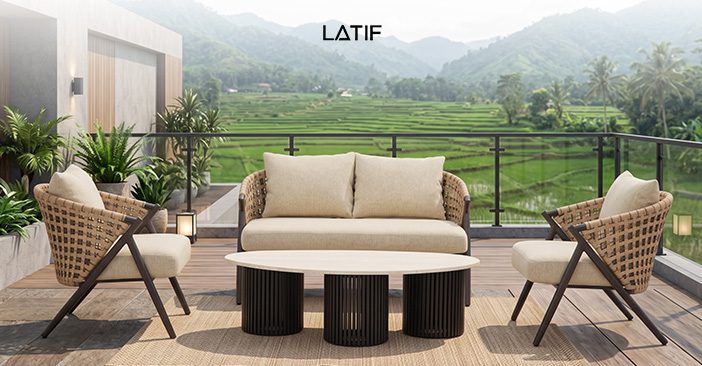
Kuta Sofa Set
A rope-and-aluminum outdoor sofa set in dark charcoal. The rope-woven back and seat surfaces allow partial wind passage rather than presenting a solid face to wind pressure. This permeability reduces the tipping moment that wind creates on solid-panel equivalents. For partially exposed rooftop settings where some wind is expected but extreme gusts are not, the Kuta’s rope-weave construction provides a practical balance between wind permeability and everyday comfort.
Bergen Dining Chair
A rope-woven dining chair on a powder-coated aluminum frame. The open rope back allows wind passage rather than building pressure against a solid surface. For rooftop restaurant settings where chairs need to be both wind-tolerant and manageable for daily stacking and repositioning by staff, the Bergen’s rope-weave back and stackable construction address both requirements simultaneously.
Rhonda Sofa Set
A solid teak sofa set with a structured frame profile. The full teak construction provides natural weight and stability. The wide footprint of the sofa base distributes weight broadly, which reduces tipping risk in crosswind. For exposed rooftop lounge areas where the aesthetic direction leans natural and warm rather than contemporary, the Rhonda’s teak character suits the space while providing the mass that wind-exposed settings require.
Find Rooftop and Outdoor Furniture at Latif Living
Buyers who specify furniture for rooftops and windy areas correctly from the start avoid the costly cycle of replacing displaced or corroded pieces after the first storm season. Visit either Latif Living showroom in Bali to see the full collection and discuss rooftop project requirements including weight specifications, material performance, and volume requirements with their team.
Latif Living Sanur
Jl. By Pass Ngurah Rai No.125 X, Sanur, Denpasar Selatan, Bali
+62 811-3886-034