
If we compare outdoor sofa vs indoor sofa at first glance, this two type of furniture look like variations of the same thing. Both are sofas, involve cushions, frames, and upholstery. But put an indoor sofa on your terrace for six months and you will understand why these two categories exist separately. The frame warps. The foam absorbs moisture. The fabric fades or mildews. The piece that cost you USD 2,000 in a furniture store now looks like a write-off.
The outdoor sofa vs indoor sofa distinction is not a marketing category. It is an engineering one. This guide explains the real differences across every dimension: environment, materials, structure, comfort, maintenance, price, and lifespan. It also covers who needs which, and recommends outdoor sofa options from Latif Living’s 2025 collection for buyers who want the right piece from the start.

The Core Difference Between Outdoor Sofa vs Indoor Sofa
An indoor sofa is designed for stable, climate-controlled environments. Both temperature and humidity stay consistent. There is no UV exposure, no rain, no wind, and no pool splash. Therefore, designers prioritise comfort, aesthetics, and style consistency with the interior.
An outdoor sofa, on the other hand, is designed for variable and often aggressive conditions. It faces UV radiation daily. It gets rained on. In coastal areas, salt air surrounds it constantly. Pool water and morning dew wet it regularly. Guests in wet swimwear sit on it directly. An outdoor sofa that cannot handle these conditions without degrading is simply not fit for purpose.
This is the dividing line. Not aesthetics, not price, not brand. Environmental performance.
Differences in Materials
This is the most important dimension of the outdoor sofa vs indoor sofa comparison.
Frame Materials
Indoor sofas commonly use solid hardwood frames, kiln-dried to reduce warping in stable indoor humidity. Multi-layer engineered wood and MDF appear in lower-cost indoor sofas. These work well indoors where humidity is stable.
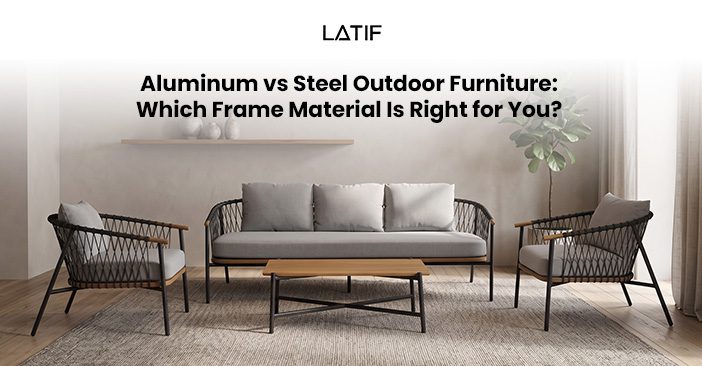
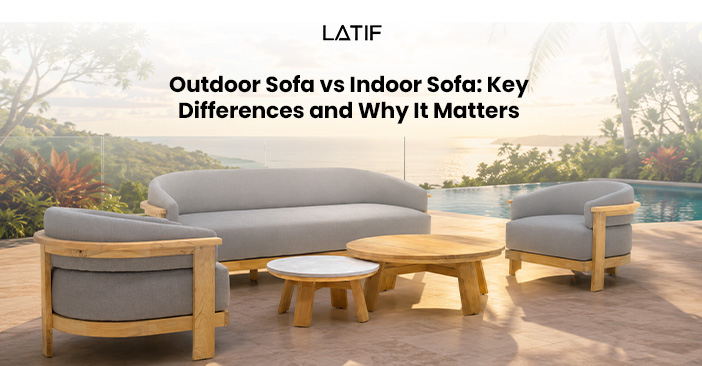
Outdoor sofas use powder-coated aluminium, stainless steel, teak, or treated hardwoods. Aluminium is the dominant frame material for outdoor furniture because it does not rust, does not corrode in pool chemical environments or salt air, and is light enough to reposition easily. Powder coating adds a protective colour layer that resists chipping and UV degradation.
Teak is the premium outdoor wood choice. Its natural silica and oil content repel moisture, resist insects, and prevent cracking through wet-dry cycles. FSC-certified teak from Indonesia’s Perhutani plantations is the benchmark material for premium outdoor furniture globally.
MDF and untreated wood frames should never be used outdoors. Moisture causes MDF to swell and delaminate. Untreated wood warps, cracks, and invites insect damage.
Woven Exterior Materials
Indoor sofas use cotton, linen, velvet, leather, and faux leather as their primary surface materials. Designers choose these for softness, appearance, and comfort in dry conditions.
Outdoor sofas, by contrast, use synthetic wicker (HDPE resin fibre), all-weather polypropylene rope, and aluminium-based sling materials. Manufacturers make HDPE synthetic wicker from high-density polyethylene extruded into fibre and woven over an aluminium frame. Good-quality HDPE wicker uses Clariant UV-protective additives, which prevent colour fade and fibre degradation under prolonged sun exposure. As a result, it does not absorb moisture and does not mould.
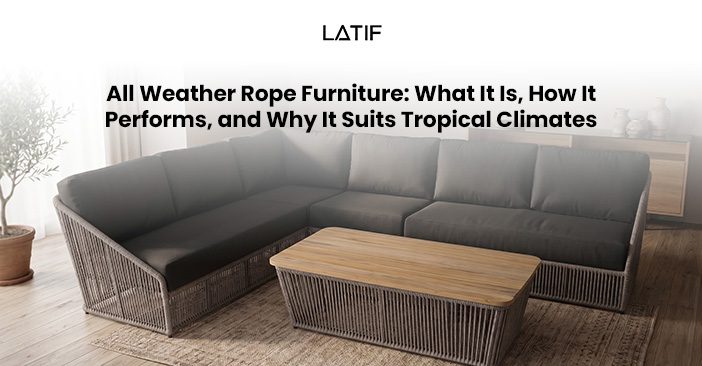
Similarly, UV-stabilised polypropylene rope holds its colour and structural integrity in outdoor conditions far longer than untreated rope or natural fibre alternatives. Weavers apply it over aluminium frames in patterns that create a contemporary, tactile surface.
Cushion Materials
Indoor sofa cushions use high-density foam for comfort and shape retention. The foam handles pressure distribution and ergonomic support over long sitting sessions. Designers choose the cover fabric for softness, texture, and aesthetic match with the interior.
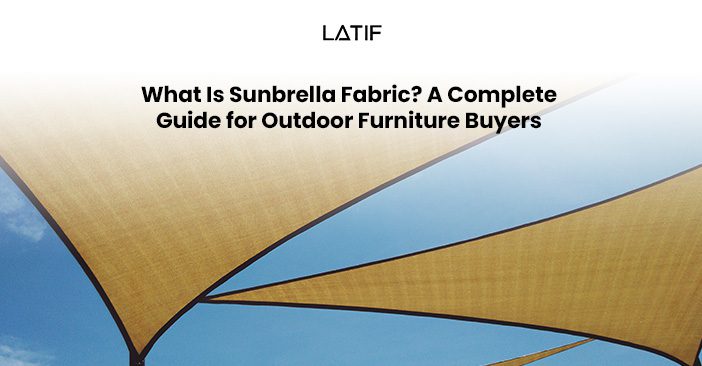
Outdoor sofa cushions, however, use quick-dry foam. This is either open-cell foam that allows water to drain through quickly, or closed-cell foam that resists moisture absorption entirely. The cover fabric must resist both UV exposure and mould. Sunbrella is the industry standard for premium outdoor cushion fabric. It is solution-dyed acrylic, meaning the colour runs through the fibre rather than sitting on the surface. Consequently, it resists fading even under intense sun exposure, resists mildew, and cleans easily with soap and water.
Standard indoor cushion foam placed in an outdoor sofa will absorb water after rain or pool splash and stay damp for days. This triggers mould growth, odour, and foam degradation. In fact, this is one of the most common mistakes buyers make when they place indoor sofas outdoors.
Differences in Structure and Design
Indoor sofas prioritise ergonomic comfort and design integration. The seat-to-back angle is typically designed for extended sitting, with backrest curves shaped for lumbar support. The overall form integrates with interior aesthetics, matching flooring, walls, and other furniture.
Outdoor sofas prioritise structural stability and flexibility. Many outdoor sofa sets are modular, meaning individual sections can be rearranged to suit different configurations or different spaces. This modularity suits outdoor areas where the layout changes seasonally or for different uses.
Outdoor sofas are also designed with weight and portability in mind. An indoor sofa is placed once and rarely moved. An outdoor sofa may be repositioned regularly, covered during storms, or moved to storage during off-seasons. Lighter frame materials and stackable or nestable designs address this.
Seat height in outdoor sofas also tends to be lower than indoor equivalents in the lounge category. Low-slung outdoor lounge sofas suit casual terrace and poolside settings where a relaxed, almost reclining posture is expected.
Differences in Comfort
Indoor sofas typically provide higher immediate comfort than outdoor sofas. The foam is softer and thicker, the upholstery has more texture and warmth, and the ergonomics are more precisely shaped for the human body in a seated or lounging position.
Outdoor sofas make a trade-off. Weather performance requires materials that are inherently firmer and less plush than indoor alternatives. Quick-dry foam is denser and less soft than high-density indoor foam. Synthetic wicker and rope surfaces are tactile but not as immediately soft as velvet or linen.
Premium outdoor sofas close this gap through thicker cushion profiles, high-quality Sunbrella fabric, and more generous seat dimensions. A well-specified outdoor sofa with 10-centimetre Sunbrella-covered cushions and a deep seat is genuinely comfortable for extended outdoor sitting. But it will not replicate the immediate sink-in softness of a premium indoor sofa.
The right frame for the question depends on where you are sitting and for how long. For extended indoor use over several hours, an indoor sofa is more comfortable. For outdoor terrace use of one to three hours at a time, a quality outdoor sofa is comfortable enough while being properly suited to its environment.
Differences in Maintenance Between Outdoor Sofa vs Indoor Sofa
Indoor sofas require moderate maintenance: regular vacuuming, occasional spot cleaning, and periodic fabric protection treatment. Leather sofas need conditioning. The maintenance is fully manageable.
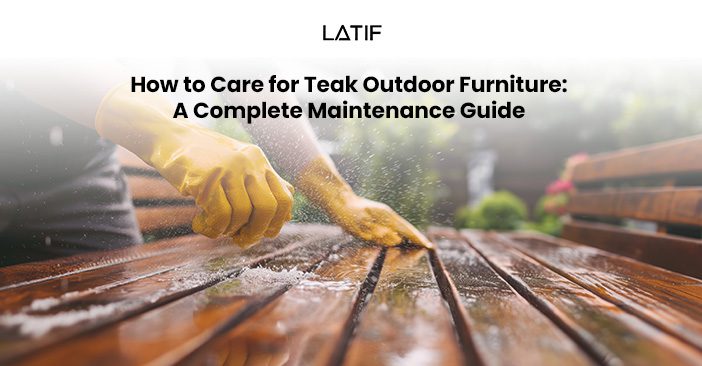
Outdoor sofas require different but generally simpler maintenance. Synthetic wicker and rope surfaces wipe clean with mild soap and water. Sunbrella cushions can be hosed down and air-dried. Teak frames need periodic oiling to maintain their warm colour, or can be left to weather naturally to silver-grey. Powder-coated aluminium frames need only occasional wiping.
The key maintenance difference is that outdoor sofas are designed to be cleaned quickly and easily between uses, which matters for commercial settings with frequent guest turnover and for residential users who want minimal upkeep.
Differences in Price and Lifespan Between Outdoor Sofa vs Indoor Sofa
Indoor sofas span an enormous price range. A budget indoor sofa starts around IDR 3,000,000. A premium Italian-made upholstered sofa can run IDR 50,000,000 or more. Lifespan depends on construction quality and use intensity. A well-made indoor sofa in a residential setting lasts 10 to 20 years.
Outdoor sofas for residential use start around IDR 8,000,000 for a complete set with two chairs, a loveseat, and a coffee table. Premium outdoor sofa sets run IDR 15,000,000 to IDR 30,000,000 for larger or higher-specification collections. A quality outdoor sofa using certified teak, powder-coated aluminium, and Sunbrella cushions has a lifespan of 10 to 20 years in outdoor conditions with basic maintenance.
The mistake buyers make is comparing the sticker price of an indoor sofa against an outdoor sofa and assuming the indoor sofa is better value. An indoor sofa placed outdoors fails within 12 to 24 months. Its effective cost per year of use is far higher than a purpose-built outdoor sofa that lasts a decade.
Who Needs an Outdoor Sofa vs an Indoor Sofa
You need an outdoor sofa if the piece will be placed on an open terrace, beside a pool, in a garden, on a balcony exposed to weather, or in any semi-indoor space that faces rain, sun, or humidity.
You need an indoor sofa if the piece lives inside a climate-controlled room, in a covered and enclosed space, or in a location where it will never face direct rain, UV exposure, or pool splash.
A covered terrace is a judgment call. If the terrace is fully indoor with walls and a roof and functions essentially as an indoor room, an indoor sofa can work. If the terrace is partially open, exposed to rain drift, or in a high-humidity tropical climate, an outdoor sofa is the safer specification.
Sofa Recommendations from Latif Living
Latif Living primarily manufactures outdoor furniture, but several pieces from their upholstery collection use QDF (Quick Dry Foam) and outdoor-grade fabric that also work well in covered indoor-outdoor spaces and interior settings with a tropical or resort aesthetic.
Oslo Collection
A full upholstery sofa set with woven rope exterior and thick cushioning using QDF and outdoor fabric. The Oslo has a structured, deep-seat profile with generous back cushions. Its neutral tone and clean silhouette suit covered indoor living rooms in villa and boutique hotel settings. The QDF construction means it handles occasional moisture without mould risk, making it suitable for indoor-outdoor transition rooms.
Lovina Collection
Natural teak legs with a powder-coated aluminium upper frame and all-weather rope seat weaving. Includes loveseat, two armchairs, and a coffee table. The teak leg detail adds visual warmth that distinguishes this set from all-aluminium alternatives. Suitable for tropical villa terraces and resort outdoor areas where natural material warmth is part of the design intention.
Ghana Collection
Teak frame combined with full-seat upholstery using QDF foam and outdoor fabric. The natural teak frame gives it a warm, organic interior quality. The Ghana’s low, wide profile suits large indoor living rooms in residential villas and boutique hotels where the furniture needs to anchor a generous floor area. The cushion construction handles the humidity found in tropical interiors.
Corfu Collection
Solid teak frame with a clean, architectural profile. Generous seat dimensions with upholstered cushions. The teak frame gives this set a premium residential character suitable for villa gardens and high-end indoor-outdoor living spaces. FSC-certified teak from Perhutani’s sustainable plantations.
Chicago Collection
A single upholstered lounge chair with a rounded, low-slung form. The Chicago works as a standalone accent piece inside a living room, reading nook, or hotel suite. Its dark charcoal upholstery and compact footprint suit contemporary interior settings. Pair it with a side table and it functions as a self-contained interior lounge zone.
Find the Right One at Latif Living
Visit either Latif Living showroom in Bali to see the full sofa collection in person. Assess the material quality, test the seat depth and cushion comfort, and discuss which set suits your terrace dimensions and design direction with their team.
Latif Living Sanur Jl. By Pass Ngurah Rai No.125 X, Sanur, Denpasar Selatan, Bali +62 811-3886-034
Latif Living Seminyak (Kerobokan) Jl. Raya Kerobokan No.132, Kerobokan, Kuta Utara, Badung, Bali +62 812-2534-9473