
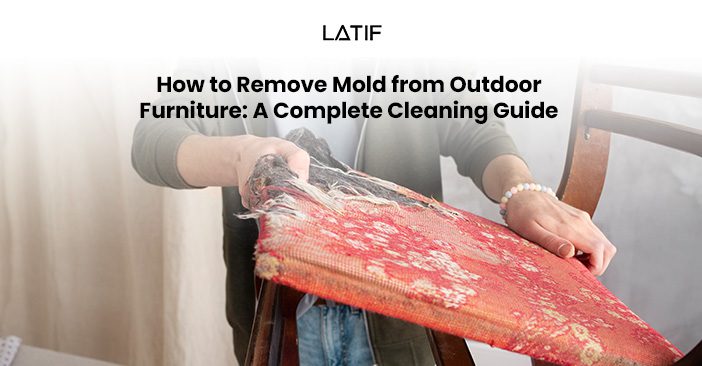
Learning how to remove mold from outdoor furniture is a skill every outdoor furniture owner in a tropical, coastal, or high-humidity environment eventually needs. Mold grows fast in these conditions. A cushion left damp after afternoon rain, a wicker surface that does not dry completely between uses, or a teak frame left untreated through a wet season can all develop visible mold growth within days.
The good news is that most mold on outdoor furniture responds well to straightforward cleaning methods. However, the right method depends on the material. What works on teak does not necessarily work on rope weaving, and what works on synthetic wicker can damage a fabric cushion. This guide covers how to remove mold from each major outdoor furniture material, how to prevent it from returning, and what the mold situation tells you about the material quality of your furniture.
Why Outdoor Furniture Gets Mold
Mold grows wherever three conditions exist simultaneously: moisture, organic material or a porous surface, and warm temperature. Outdoor furniture in tropical and coastal environments provides all three continuously.
Rain wets the surface. Humidity prevents complete drying. Organic material, whether wood, natural fibre, or even dust and pollen that settle on synthetic surfaces, gives mold a food source. Temperature in tropical climates stays in the range that mold thrives in year-round.
Furthermore, outdoor furniture with poor drainage design concentrates moisture in joints, woven crevices, and underneath cushions, which are exactly the spots where mold establishes itself first. As a result, buyers who choose outdoor furniture with quick-drain construction and non-porous materials face significantly less mold pressure than those who use indoor materials outdoors or choose furniture with poor drainage geometry.
How to Remove Mold from Outdoor Teak Furniture
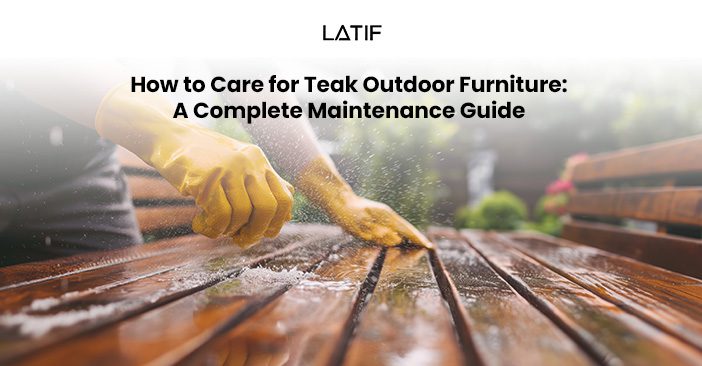
Teak is naturally mold-resistant due to its high oil content. However, surface mold can still establish itself on teak furniture that sits in sustained moisture without adequate airflow or cleaning. The mold typically appears as a grey-green surface discolouration rather than deep penetration into the wood.
What you need: Warm water, mild dish soap or white vinegar, a soft-bristle brush, and a clean cloth.
- Step 1: Move the furniture into sunlight. Direct sunlight kills surface mold on contact. Before applying any cleaning solution, position the piece in full sun for 30 to 60 minutes if possible.
- Step 2: Brush off loose mold. Use a dry soft-bristle brush to remove loose mold from the surface. Do this outdoors and away from other furniture to avoid spreading spores.
- Step 3: Apply a cleaning solution. Mix one part white vinegar with two parts warm water. Alternatively, use a mild dish soap solution. Apply the mixture to the affected area with a soft brush or cloth and scrub gently along the grain of the wood.
- Step 4: Rinse thoroughly. Rinse the area with clean water and wipe dry with a cloth. Do not leave excess moisture sitting on the surface.
- Step 5: Allow complete drying. Leave the piece in sunlight until completely dry before returning it to its position or applying teak oil.
For stubborn mold that does not respond to vinegar, a diluted solution of one part bleach to ten parts water works on teak. However, bleach removes colour and dries out the wood, so always follow a bleach treatment with teak oil once the piece is fully dry.
What to avoid: Do not use a pressure washer on teak furniture. High-pressure water raises the grain and strips natural oils, which accelerates future mold growth rather than preventing it.
How to Remove Mold from Outdoor Synthetic Wicker and Rope Weaving Furniture
HDPE synthetic wicker and polypropylene rope weaving are both non-porous materials. Consequently, mold sits on the surface of these materials rather than penetrating into them. This makes cleaning significantly easier than with natural materials.
What you need: Warm water, mild dish soap, a soft brush, and a garden hose or bucket of clean water.
- Step 1: Rinse the surface. Use a garden hose or bucket of clean water to wet the wicker or rope surface. This loosens surface mold and prepares the material for cleaning.
- Step 2: Apply soapy water. Mix mild dish soap with warm water. Apply the solution to the affected areas with a soft brush and scrub the weave pattern in multiple directions. The brush reaches into the woven crevices where mold concentrates.
- Step 3: Rinse completely. Rinse all soap residue from the weave with clean water. Soap residue left in woven surfaces attracts dust and organic material, which creates the conditions for faster mold return.
- Step 4: Dry in sunlight. Position the piece in direct sunlight until completely dry. Synthetic wicker and rope dry quickly because the materials do not absorb water. Most pieces dry fully within one to two hours in direct sun.
For persistent mold on synthetic wicker or rope, a solution of one part white vinegar to one part water is safe on these materials and effective on mold. Unlike bleach, vinegar does not affect the colour of synthetic fibre. Therefore, vinegar is the preferred cleaning agent for coloured rope weaving where colour preservation matters.
What to avoid: Do not use bleach on coloured rope or wicker unless you are prepared to accept colour lightening. Do not use abrasive scrubbing pads, as these scratch the surface of synthetic fibre and create micro-abrasions that trap moisture and encourage future mold growth.
How to Remove Mold from Aluminium Frames
Powder-coated aluminium does not support mold growth directly. However, mold from adjacent surfaces, such as wicker weaving, rope, or cushion fabric, can transfer onto aluminium joints and frame surfaces, particularly in tight joints where moisture accumulates.
What you need: Warm water, mild dish soap, a soft cloth, and a dry towel.
- Step 1: Wipe the frame with soapy water. Apply a mild dish soap solution to the affected frame sections with a soft cloth. Scrub lightly and pay attention to joints and connection points where mold concentrates.
- Step 2: Rinse and dry immediately. Rinse with clean water and dry the frame with a towel. Aluminium cleans and dries fast, so this step takes very little time.
- Step 3: Inspect the powder coat. Check whether the mold has caused any lifting or bubbling in the powder coat. Mold does not damage sound powder coat. However, if the coating shows damage, the underlying aluminium may begin to oxidise at those points. Additionally, damaged powder coat sections can accept touch-up paint from a hardware store if the area is small.
How to Remove Mold from Outdoor Cushions
Outdoor cushion mold is the most common and most frustrating mold problem in outdoor furniture. Foam cushions absorb moisture after rain or pool splash. If they do not dry completely before nightfall, mold begins to establish in the foam core within 24 to 48 hours.
The cleaning approach depends on whether the cushion uses outdoor-grade fabric such as Sunbrella, or standard indoor fabric used outdoors.
Mold on Sunbrella and Outdoor-Grade Fabric Cushions
Sunbrella fabric is solution-dyed acrylic, which means the fabric does not absorb moisture or mold spores at the fibre level in the same way indoor fabrics do. Surface mold on Sunbrella typically cleans off completely with the following method.
What you need: Mild dish soap, warm water, a soft brush, and a garden hose.
- Step 1: Brush off loose mold from the fabric surface outdoors.
- Step 2: Mix one quarter cup of mild dish soap with one cup of warm water. Apply the solution to the affected area and scrub with a soft brush.
- Step 3: For persistent mold stains on Sunbrella fabric, Sunbrella’s manufacturer recommends a solution of one cup bleach and one quarter cup mild soap per four litres of water. Apply, allow to sit for 15 minutes, then scrub and rinse thoroughly. Sunbrella fabric can accept diluted bleach without colour damage because of its solution-dye construction.
- Step 4: Rinse completely and allow the cushion to air dry in full sunlight. Do not replace cushion covers on the foam until both the cover and the foam core are completely dry.
Mold on Standard Indoor Fabric Cushions Used Outdoors
Standard indoor fabric cushions develop deeper mold penetration because the fibre absorbs moisture rather than shedding it. Surface cleaning often removes visible mold but leaves spore residue in the fabric and foam.
For light mold, apply a white vinegar and water solution (equal parts), allow it to sit for one hour, then scrub and rinse. However, if mold has penetrated into the foam core, replacement is the more practical solution than deep cleaning. Foam with established mold growth retains a musty odour even after surface cleaning and poses ongoing health concerns.
The practical lesson here is that standard indoor foam and fabric should never be used in outdoor cushion applications in tropical environments. Sunbrella fabric with quick-dry foam is the correct specification for outdoor cushions in these conditions.
How to Remove Mold from Natural Rattan and Wood
Natural rattan is particularly susceptible to mold in tropical environments because it is a porous organic material that absorbs and retains moisture. Similarly, untreated or poorly treated natural wood develops surface mold quickly in sustained humidity.
What you need: White vinegar, warm water, a soft brush, a cloth, and teak oil (for wood) or linseed oil (for rattan).
- Step 1: Brush off loose mold outdoors.
- Step 2: Apply a solution of equal parts white vinegar and warm water to the affected areas. Scrub gently with a soft brush. Vinegar kills mold at the surface without damaging natural fibres.
- Step 3: Wipe the surface dry with a clean cloth and allow to dry completely in sunlight.
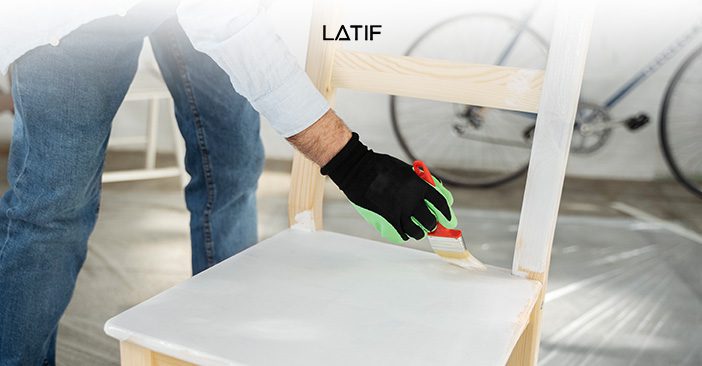
- Step 4: Once fully dry, apply a protective oil treatment. Teak oil on natural wood and linseed oil on natural rattan create a moisture-resistant surface layer that significantly slows future mold development.
Repeat this process at the start of each wet season as a preventative measure, not just in response to visible mold.
How to Prevent Mold from Returning
Cleaning mold removes the current problem. However, prevention is what stops it from returning within the next rainy period.
Choose quick-drain materials from the start. Sling fabric, synthetic wicker, and all-weather rope all drain and dry far faster than upholstered cushions or natural fibre. As a result, buyers who specify these materials face significantly less mold pressure than those who use absorptive materials outdoors.
Store or cover cushions when not in use. Even Sunbrella cushions benefit from storage or furniture covers during sustained rain periods. Latif Living carries custom furniture covers that protect pieces between use and during wet seasons.
Ensure adequate airflow around furniture. Furniture pushed against walls or placed in corners with poor airflow dries more slowly. Positioning pieces in areas with natural air circulation reduces the time moisture stays on surfaces after rain.
Clean furniture regularly, not just when mold appears. Dust, pollen, and organic debris accumulate on outdoor furniture surfaces and give mold a food source. A monthly rinse with soapy water and a brush removes this buildup before mold establishes itself.
Apply protective treatments seasonally. Teak oil on teak frames and UV-protective spray on synthetic materials both extend the surface’s resistance to moisture penetration. Apply these at the start of wet season and again mid-season for furniture that faces sustained outdoor conditions.
What Mold Tells You About Your Furniture’s Material Quality
Frequent mold problems on outdoor furniture are often a symptom of material choices rather than cleaning negligence. Furniture built with the right outdoor materials resists mold by design.
FSC-certified teak resists mold naturally through its oil content. HDPE synthetic wicker with Clariant UV protection does not support mold growth at the fibre level. Phifertex sling fabric drains instantly. Sunbrella cushion fabric sheds moisture rather than absorbing it.
By contrast, MDF frames that hold moisture in their core, natural rattan left untreated in outdoor conditions, standard polyester cushion fabric in tropical humidity, and iron or steel frames that rust and create organic surface residue all create ideal conditions for repeated mold growth.
If your outdoor furniture develops mold repeatedly despite regular cleaning, the material specification is likely the underlying issue. Replacing affected pieces with properly specified outdoor materials solves the problem at the source rather than managing it repeatedly.
Properly Specified Outdoor Furniture at Latif Living
Latif Living manufactures outdoor furniture from FSC-certified teak, powder-coated aluminium, HDPE synthetic wicker with Clariant UV protection, UV-stabilised polypropylene rope, Phifertex sling, and Sunbrella cushion fabric. Each of these materials handles tropical and coastal conditions without the mold vulnerability that comes with lesser-specified outdoor furniture.
Visit either Latif Living showroom in Bali to see the full collection and discuss material specifications for your outdoor space with their team.
Latif Living Sanur Jl. By Pass Ngurah Rai No.125 X, Sanur, Denpasar Selatan, Bali +62 811-3886-034
Latif Living Seminyak (Kerobokan) Jl. Raya Kerobokan No.132, Kerobokan, Kuta Utara, Badung, Bali +62 812-2534-9473