
Knowing how to choose a coffee table saves you from one of the most common furniture mistakes people make: buying a table that looks right in a showroom but fails the moment it sits in an actual room. The coffee table is the most centrally positioned piece in any living or lounge area. Therefore, getting the size, height, shape, and material right has a disproportionate effect on how the entire space functions.
This guide walks through every factor that determines whether a coffee table works for your space, and recommends options from Latif Living’s collection for buyers sourcing outdoor, tropical, and resort-quality pieces.
Start With the Function, Not the Style
Before looking at any specific coffee table, define how you actually plan to use it. This single step eliminates most wrong choices before you start shopping.
A coffee table in a residential living room typically holds drinks, books, remote controls, and decorative objects. It serves as a surface and a visual anchor for the seating arrangement. In this context, stability, surface area, and height relative to the sofa matter most.
A coffee table in a hotel lobby lounge holds drinks for guests and contributes to the space’s visual identity. In this case, material quality, visual presence, and durability under commercial use matter most.
A coffee table on an outdoor villa terrace faces rain, humidity, and UV exposure in addition to daily use. Consequently, material specification for outdoor conditions becomes the primary consideration rather than purely aesthetic ones.
Furthermore, some buyers want a coffee table that doubles as extra seating for small gatherings, or as a light work surface. In those cases, height and surface sturdiness become more important than they would be for a purely decorative piece.
Step 1: Get the Height Right
Height is the most overlooked dimension in coffee table selection, yet it affects comfort more directly than shape or colour.
The standard rule is to choose a coffee table with a surface height equal to or slightly lower than the seat height of your sofa or lounge chairs. Most sofas have a seat height of 40 to 45 centimetres. Therefore, a coffee table at 38 to 45 centimetres high sits at the right level for someone to reach a drink or place a book without leaning forward uncomfortably.
A table that sits too low forces the sitter to lean down and extend their arm across a large gap. A table that sits too high crowds the knees of the person seated directly opposite. Both are uncomfortable enough to make the table feel wrong even when it looks correct.
For outdoor lounge settings where seating tends to sit lower than standard indoor sofas, a coffee table in the 35 to 42 centimetre range generally suits better. Additionally, for very deep outdoor lounge chairs where guests recline almost fully, a lower coffee table at 32 to 38 centimetres works more naturally.
Step 2: Choose the Right Size for the Space
Size is the dimension where most buyers make their biggest mistake. They choose a table that looks proportionate in a showroom but either overwhelms or disappears in their actual space.
Length and Width
As a general rule, the coffee table length should measure 50 to 70 percent of the sofa length it faces. For example, a 200 cm sofa pairs well with a coffee table between 100 and 140 cm in length. A table shorter than 50 percent of the sofa length looks undersized and detached from the seating arrangement. A table that matches or exceeds the sofa length crowds the room and creates circulation problems.
For L-shaped sofas or large modular arrangements, a larger round or square table anchors the arrangement better than a narrow rectangular one. In this case, a table at 80 to 100 cm in diameter works well as a centre piece.
Clearance Around the Table
Leave at least 40 to 45 centimetres of clear space between the coffee table edge and the sofa seat edge. This gives a seated person comfortable leg room and allows someone to walk past without squeezing. Moreover, it allows the table to function as a surface without physically blocking access to the seating.
For commercial spaces such as hotel lounges or restaurant bar areas, increase this clearance to 50 to 60 centimetres. Staff moving through the space with trays need wider passage than residential guests.
Matching the Table to Room Size
In a small lounge area, a large rectangular coffee table dominates and reduces the sense of space. In this case, a round or oval table is a better choice. Round tables have no corners to catch on, which makes them safer and more spatially efficient in tight areas.
In a large open lounge or villa outdoor terrace, a single small coffee table disappears visually and fails to anchor the seating area. Here, a larger table, or a pair of nesting tables, creates the visual weight the space requires.
Step 3: Choose the Right Shape
Shape affects both the visual character of the space and the practical function of the table.
Rectangular
Rectangular coffee tables are the most versatile shape. They suit standard sofa arrangements and work in both compact and generous spaces. However, sharp corners can be a concern in households with young children or in tight commercial spaces where guests move quickly through the area.
Round and Oval
Round and oval tables create softer, more open visual lines. They suit square rooms where a rectangular table would fight the geometry, and they work well in spaces where multiple people sit around the table rather than one person facing it from a sofa. Furthermore, round tables eliminate corner traffic concerns and allow more seating positions around the perimeter.
Round tables in the 65 to 100 cm diameter range work well for residential lounge settings. Oval tables at 100 to 130 cm length suit boutique hotel lobbies and villa lounge terraces where the table needs to serve a slightly wider seating group.
Nesting Tables
Nesting tables consist of two tables of different sizes that store together and separate when needed. They suit spaces where the table function changes between different uses, for example, a hotel lounge that serves individual guests at quiet periods and larger groups during events. Additionally, nesting tables give staff the flexibility to reconfigure a lounge area quickly without large pieces to move.
Square
Square coffee tables suit square seating arrangements such as four chairs or two loveseats facing each other. They distribute surface area evenly around the seating group. For outdoor lounge areas with a symmetrical arrangement, a square table creates a balanced composition.
Step 4: Choose the Right Material for Your Environment
Material is the decision that determines how long the table lasts and how much maintenance it needs. In outdoor and tropical settings, this decision is even more consequential than in stable indoor environments.
Teak
Teak is the strongest natural material choice for a coffee table that lives outdoors or in a high-humidity tropical interior. Its natural silica and oil content repel moisture, resist insects, and prevent warping through wet-dry cycles. FSC-certified teak from Perhutani’s Indonesian plantations is the benchmark for sustainable, high-quality outdoor teak furniture.
Indoors, teak adds natural warmth and a material richness that suits tropical, contemporary, and resort aesthetics. Outdoors, it handles rain, humidity, and sun exposure without degrading. Teak coffee tables need minimal maintenance. Periodic teak oil application maintains the warm honey tone, or owners can leave teak to weather naturally to silver-grey.
Powder-Coated Aluminium
Aluminium frames for coffee tables work well in outdoor settings because they do not rust, corrode, or warp. Powder coating adds colour and UV protection. For terrace coffee tables beside pools or in coastal settings, an aluminium frame with a teak or stone top provides the durability of metal structure with the warmth of a natural top surface.
Synthetic Wicker (HDPE)
Wicker-style coffee tables use HDPE synthetic resin fibre over aluminium frames. They suit outdoor and semi-covered settings where a natural, warm aesthetic is the design intention. Good-quality HDPE wicker uses Clariant UV-protective additives that prevent fading and fibre degradation under prolonged sun exposure. As a result, the table maintains its appearance far longer than natural rattan alternatives in outdoor conditions.
Solid Hardwood (Non-Teak)
For indoor coffee tables in temperate or climate-controlled environments, solid hardwood options in oak, walnut, or rubber wood offer good durability and a range of finish options. However, these materials do not perform outdoors in tropical or coastal conditions. Non-teak hardwoods lack teak’s natural moisture and insect resistance, so they should stay indoors.
Rope and Woven Materials
Some coffee table designs incorporate rope-woven bases or skirts over aluminium or teak top surfaces. These work particularly well in outdoor tropical settings where the rope weaving adds textural character to the table design. UV-stabilised polypropylene rope handles outdoor conditions without fading or fibre degradation.
Step 5: Consider the Surface Top
The table top material affects both the visual character and the practical performance of the coffee table.
Solid teak top: Warm, natural, handles drink contact and daily cleaning. The most versatile top choice for both indoor and outdoor settings.
Ceramic or stone top: Cool to the touch, resistant to heat from cups and glasses, and easy to clean. Suits contemporary settings where a harder, more industrial surface is appropriate. However, ceramic tops are heavier and more fragile under impact than wood.
Slatted teak top: Slatted construction allows water to drain through in outdoor settings. This prevents pooling on the table surface after rain. It is particularly practical for uncovered outdoor coffee tables beside pools or on open terraces.
Wicker top: A woven wicker top surface creates texture and visual warmth but requires more careful cleaning in outdoor settings. Wicker tops suit covered or semi-covered settings rather than fully open outdoor areas.
Step 6: Indoor vs Outdoor Coffee Tables
For covered indoor spaces in temperate climates, most coffee table materials work without issue. In these environments, aesthetics and comfort take priority over weather performance.
For outdoor settings in tropical or coastal climates, however, the specification changes significantly. Only materials that handle sustained moisture, UV exposure, salt air, and temperature variation belong outdoors. Teak, powder-coated aluminium, and HDPE synthetic wicker with UV protection are the materials that consistently perform in these conditions.
A common mistake is placing an indoor coffee table on a covered terrace, assuming the roof provides enough protection. In high-humidity tropical climates, humidity alone without direct rain causes MDF to swell, untreated wood to warp, and standard metal frames to corrode. Therefore, outdoor specification is necessary for any piece that lives in an outdoor or semi-outdoor environment, regardless of whether it faces direct rain.
Coffee Table Recommendations from Latif Living
Latif Living’s nmcollection includes a wide range of coffee tables suited to outdoor terrace lounge areas, villa living rooms, hotel lobbies, and resort-style residential spaces. All pieces use outdoor-grade materials including FSC-certified teak, powder-coated aluminium, and HDPE synthetic wicker.
Nantes Nesting Tables
A pair of nesting coffee tables with round teak tops on black metal bases. The two-table set provides flexibility for changing space configurations. Use both tables for larger groups and nest the smaller table beneath the larger one when the space needs to open up. Moreover, the round teak tops suit both rectangular and L-shaped lounge arrangements because the curved edge does not create corner circulation issues.
Beratan Coffee Table
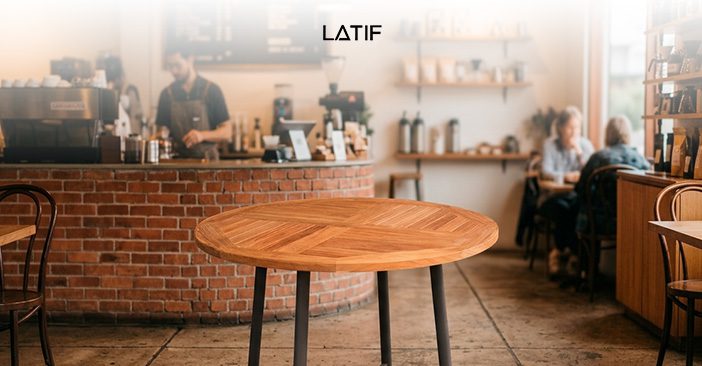
A round coffee table with a solid teak mosaic top and black powder-coated metal frame. The mosaic teak top creates a visual texture that distinguishes this piece from standard single-slab tables. At 80 cm in diameter, it serves a two to three-seat lounge arrangement comfortably. Furthermore, the round format suits compact lounge zones where a rectangular table would create circulation problems.
Galata Nesting Tables
A premium nesting table set with rope-woven drum bases and teak tops. The Galata’s rope weave base creates a distinctive visual character that suits boutique hotel lounge areas and luxury villa terraces. The combination of oval and round tops handles two different configurations within the same footprint. Additionally, the rope weave base adds the handcrafted quality that distinguishes a design-forward coffee table from a standard furniture catalog piece.
Los Angeles Tables
Bring structural elegance and versatile functionality to your outdoor or indoor lounge areas. The Angeles Coffee Table set embodies the best of modern minimalist design, pairing the organic beauty of premium timber with the sleek, sharp contrast of a dark matte frame. The set features a clever nesting configuration, consisting of a large circular coffee table and a matching smaller side table. The beautiful slatted wood tabletops sit elegantly upon an architectural, X-braced metal base, delivering a clean-lined look that enhances the spatial flow of high-end villa terraces, resort pool decks, and contemporary living spaces.
Darby Coffee Table
A balances structural strength with a beautifully soft, organic silhouette. Crafted entirely from premium timber, this low-profile anchor piece brings an effortless sense of modern minimalism to high-end lounges. Bring a grounding architectural presence to your elite outdoor or indoor living spaces. The table features an expansive, gently curved racetrack oval tabletop built with elegant longitudinal wooden planks. Elevated by two broad, sculptural block legs with smooth, rounded edges, its fluid design enhances the spatial flow of open-air luxury villas, upscale resort terraces, and contemporary interiors alike.
Find the Right Coffee Table at Latif Living
Visit either Latif Living showroom in Bali to see the full coffee table collection alongside the sofa and lounge sets they pair with. Test the height against your intended seating, assess the teak surface quality, and discuss which table suits your space dimensions with their team.
Latif Living Sanur Jl. By Pass Ngurah Rai No.125 X, Sanur, Denpasar Selatan, Bali +62 811-3886-034
Latif Living Seminyak (Kerobokan) Jl. Raya Kerobokan No.132, Kerobokan, Kuta Utara, Badung, Bali +62 812-2534-9473