
All weather rope furniture has become one of the fastest-growing outdoor furniture categories globally, and for practical reasons. It combines the handcrafted, tactile quality of natural fibre with the weather resistance that tropical and coastal environments demand. Hotels, villa developers, and residential buyers across Southeast Asia, Australia, Europe, and North America now specify all weather rope furniture as a primary material for pool decks, terraces, and outdoor lounge areas.
This guide explains exactly what all weather rope is, how manufacturers produce it, how it compares to synthetic wicker and natural rattan, how it performs in Bali’s climate specifically, and which Latif Living pieces represent the best of this material category.
What Is All Weather Rope?
All weather rope furniture uses polypropylene (PP) or polyethylene (PE) rope woven tightly over a structural frame, typically powder-coated aluminium or solid teak. The rope creates the seat, backrest, and often the armrest surface of the furniture piece. Unlike upholstered cushion seats or woven wicker panels, rope weaving produces a continuous, three-dimensional surface texture that feels handcrafted because it largely is.
The term “all weather” refers specifically to the rope material’s treatment rather than to its natural state. Standard polypropylene rope degrades under UV exposure, absorbs moisture at the fibre level, and loses structural tension over time in outdoor conditions. All weather rope, by contrast, incorporates UV-stabilising additives, typically from chemical specialist Clariant, during the manufacturing process. These additives protect the polymer chains in the rope from UV-driven breakdown, which is the primary cause of colour fading and fibre embrittlement in outdoor synthetic materials.
Furthermore, all weather rope furniture uses rope that manufacturers produce in-house at dedicated rope extrusion facilities. This gives quality manufacturers, including Latif Living, direct control over the UV additive concentration, the rope diameter, the tensile strength, and the colour consistency across production batches.
How All Weather Rope Furniture Is Made
Understanding the production process helps buyers distinguish quality pieces from lower-specification alternatives.
Step 1: Rope Production
Quality outdoor furniture manufacturers extrude rope in-house. Polypropylene pellets are melted and extruded through dies that produce rope of a consistent diameter, typically 4 to 8 mm depending on the furniture application. Clariant UV-stabilising masterbatch is mixed into the polymer before extrusion. This ensures UV protection runs through the full fibre cross-section rather than sitting on the surface as a coating that wears away.
Latif Living runs 10 all weather rope machines at their Kediri factory, producing over 30 tons of rope per month. In-house production means their UV additive concentration, rope diameter, and colour remain consistent across every batch used in their furniture.
Step 2: Frame Construction
All weather rope requires a robust structural frame because the rope attaches under significant tension. Powder-coated aluminium is the standard frame material. The aluminium is cut, bent, welded, and powder-coated before the rope weaving begins. Quality manufacturers inspect the powder coat for adhesion and consistency before the frame moves to weaving. Thin or poorly adhered powder coat will begin to chip at rope attachment points, accelerating corrosion.
Some premium pieces use solid teak for the frame legs combined with aluminium for the structural seat and back rails. The teak adds visual warmth and material character while the aluminium provides the structural rigidity that rope tension requires.
Step 3: Hand Weaving
The rope weaving is done by hand. Workers wrap and weave the rope around the frame in specific patterns, pulling each strand under tension to create a firm, even surface. The pattern determines the visual character of the finished piece: a tighter weave creates a denser, more solid appearance, while an open weave creates a more graphic, see-through surface.
This hand weaving process is what gives all weather rope furniture its handcrafted quality. Two chairs from the same production run share the same pattern and tension, but the slight variations in individual handwork create a material personality that machine-made wicker or cushion upholstery cannot replicate.
Step 4: Quality Control and Testing
Quality manufacturers test rope furniture for structural integrity, UV resistance, and tension consistency before shipment. This includes pull tests on rope attachment points, UV exposure simulations to verify colour retention, and dimensional checks to ensure pieces meet the specified measurements.
All Weather Rope vs Synthetic Wicker vs Natural Rattan
These three materials look superficially similar in catalog photos. However, they perform differently in outdoor conditions, suit different aesthetics, and carry different maintenance requirements.
All Weather Rope
All weather rope creates a bold, graphic surface texture. The individual rope strands are visible as distinct elements, which gives the material a three-dimensional, architectural quality that synthetic wicker does not replicate. The surface is firm and warm to the touch. It suits contemporary, resort, and tropical design aesthetics.
In terms of outdoor performance, UV-stabilised all weather rope resists fading for 5 to 10 years in tropical conditions with basic maintenance. The rope does not absorb moisture, dries quickly after rain, and does not mould at the fibre level. Furthermore, rope weaving allows more airflow than solid wicker panels, which makes rope furniture feel cooler to sit on in hot tropical conditions.
The primary maintenance requirement is periodic cleaning to remove dust and organic debris from between the rope strands. A soft brush and soapy water handles this effectively.
Synthetic Wicker (HDPE Resin Fibre)
Synthetic wicker uses HDPE fibre extruded in flat or round profiles and woven into tight panels over aluminium frames. The result is a dense, basket-weave surface that looks similar to natural rattan but performs outdoors.
Good-quality HDPE wicker with Clariant UV protection resists fading and fibre degradation for 8 to 12 years in tropical conditions. The tight weave creates a slightly softer visual quality than rope weaving and suits natural, organic, and resort aesthetics. However, synthetic wicker has less design versatility than rope: the weave pattern options are more limited, and the surface does not create the same graphic architectural quality as rope.
Additionally, synthetic wicker panels can collect dust and organic debris more easily than rope because the tight weave creates small crevices that trap particles. Consequently, regular cleaning is equally important for wicker furniture in outdoor tropical settings.
Natural Rattan
Natural rattan is a vine-based material harvested from tropical forests and processed into furniture frames and woven panels. It creates a warm, organic aesthetic that is difficult to replicate synthetically. However, natural rattan is fundamentally unsuited to outdoor use in tropical climates.
Rattan absorbs moisture. In sustained humidity, it softens and weakens structurally. Direct rain and repeated wet-dry cycles cause natural rattan to crack and split. UV exposure bleaches and degrades the fibre. In Bali’s climate specifically, natural rattan outdoor furniture typically shows significant degradation within 12 to 24 months without constant protective treatment and covered storage.
Therefore, natural rattan suits dry indoor settings. For outdoor tropical furniture, all weather rope and synthetic wicker are the correct material specifications. Natural rattan is not.
How All Weather Rope Performs in Bali’s Climate
Bali’s climate creates four specific outdoor furniture challenges: high UV exposure year-round, seasonal heavy rainfall, consistently high humidity at 70 to 90 percent, and salt air in coastal locations.
All weather rope with Clariant UV additives addresses UV exposure directly. The Clariant masterbatch stabilises the polymer chains against UV-driven oxidation, which is the mechanism that causes colour fading and fibre embrittlement. In direct tropical sun, quality all weather rope retains its colour for 5 to 10 years. Rope without UV protection fades visibly within one to two seasons.
Rainfall is not a problem for rope furniture because rope does not absorb water. Rain runs through and off the rope surface immediately. The aluminium frame underneath does not rust. Consequently, all weather rope furniture needs no preparation for rain and no drying time after it.
Humidity similarly does not affect rope furniture because polypropylene does not absorb moisture at the molecular level. There is no fibre swelling, no softening, and no structural change in sustained humidity. This is fundamentally different from natural rattan, natural wood (other than teak), and standard polyester materials, all of which absorb moisture and degrade in high-humidity conditions.
Salt air corrodes untreated metal. However, the powder-coated aluminium frames standard in all weather rope furniture resist salt air effectively because the powder coat creates a barrier between the metal and the corrosive environment. For beachfront and clifftop properties in Bali, this matters significantly.
With basic maintenance, quality all weather rope furniture lasts 8 to 15 years in Bali’s outdoor conditions. This places it at the same durability level as FSC-certified teak and quality synthetic wicker, which are the other two most durable outdoor furniture materials available in this market.
Maintenance Requirements for All Weather Rope Furniture
All weather rope furniture is among the lowest-maintenance outdoor furniture categories available. However, some basic care extends its lifespan and keeps it looking its best.
Regular cleaning. Dust, pollen, and organic debris accumulate between rope strands over time. A monthly rinse with a garden hose and a soft brush with mild soapy water removes this buildup before mould has a chance to establish on the debris rather than on the rope itself. Rinse completely and allow to air dry in the sun.
Mould on rope furniture. Mould does not grow on the rope itself because polypropylene does not provide an organic food source. However, organic debris trapped between strands can support mould growth. Regular cleaning prevents this. If mould appears on debris between strands, a solution of equal parts white vinegar and water applied with a soft brush removes it effectively without affecting rope colour.
Frame inspection. Check the powder-coated aluminium frame at the rope attachment points annually. Rope under tension can wear at attachment points over time. If the powder coat shows chips or scratches at these points, touch up with powder coat paint or clear lacquer to prevent corrosion from establishing.
Avoid harsh chemicals. Bleach at high concentrations can lighten the rope colour on dark-toned pieces. For coloured rope furniture, stick to mild soap and vinegar solutions. For white or natural-tone rope, diluted bleach is safe if needed for stubborn staining.
Cushion care. All weather rope furniture typically pairs with Sunbrella-fabric cushions. Remove and store cushions during extended rain periods or overnight if the furniture sits in an uncovered location. Sunbrella fabric handles moisture well, but removing the cushions from the frame allows both the cushion and the rope beneath it to dry completely, which prevents the moisture accumulation that encourages mould on organic debris.
Where All Weather Rope Furniture Works Best
All weather rope furniture suits a wide range of applications in both residential and commercial outdoor settings.
Pool decks and pool lounge areas. The rope surface does not absorb pool water, drains quickly after splash, and cleans easily between uses. For hotel pool areas, rope-woven lounge chairs and sofa sets handle constant wet-guest contact without maintenance pressure.
Covered and open terraces. All weather rope handles both covered terrace conditions and fully open outdoor exposure. In covered settings, it maintains its colour and structural integrity longer because UV exposure is reduced. In open settings, the Clariant UV protection provides the needed resistance.
Outdoor dining. Rope-woven dining chairs clean easily between covers, handle daily movement and repositioning, and create a visual character that distinguishes a restaurant terrace from a generic outdoor setting.
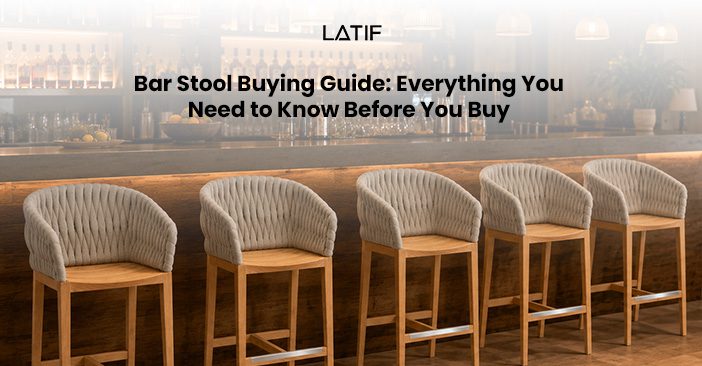
Outdoor bar settings. Rope bar stools combine the contemporary tropical aesthetic with the durability that high-turnover commercial bar areas require. The rope dries fast and cleans quickly between guests.
Hotel and resort lounge areas. All weather rope furniture appears in the outdoor lounge areas of boutique hotels and resorts globally because it creates a handcrafted visual quality that distinguishes a designed outdoor space from a standard furniture catalog installation.
5 Latif Living All Weather Rope Furniture Picks
Latif Living produces all weather rope in-house at their Kediri factory, using Clariant UV-stabilising masterbatch. Their rope production runs 24 hours across 10 machines and produces more than 30 tons of rope per month. This scale allows them to control rope diameter, UV additive concentration, tensile strength, and colour consistency across every batch. Here are five pieces from their 2025 collection that represent the range of applications for all weather rope furniture.
1. Kuta Collection
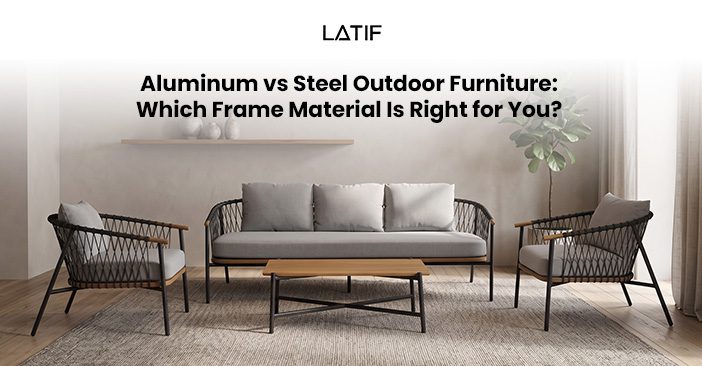
A rope-and-aluminium outdoor sofa set in dark charcoal, including a two-seat loveseat, two armchairs, and a teak-top coffee table. The Kuta uses all weather rope across the full seat and back surface of each piece, creating a continuous rope weave that is consistent in tension and pattern across the set.
Why it works: The dark rope and aluminium combination creates a graphic, contemporary profile suited to modern outdoor terraces, poolside lounge areas, and hotel outdoor rooms. The teak-top coffee table introduces natural material warmth that prevents the set from reading as purely industrial. Additionally, the rope weaving allows full airflow through the seat surface, which makes it comfortable in Bali’s warm outdoor conditions without the heat buildup that cushioned seats can create.
2. Gili Dining Chair
A rope-woven dining chair on a powder-coated aluminium frame. The Gili uses all weather rope across the back panel in a pattern that creates a visible, open weave. The seat uses a different weave density, providing a firmer surface for dining use.
Why it works: Dining chairs face the most intensive daily use of any outdoor furniture category. The Gili’s all weather rope back handles the repeated contact, repositioning, and cleaning that restaurant and terrace dining environments impose. The rope back cleans in seconds with a damp cloth. Furthermore, the open back weave creates airflow that a fully enclosed wicker or solid upholstered back does not, which matters in tropical dining settings where guests sit for 60 to 90 minutes at a stretch.
3. Oxford Collection
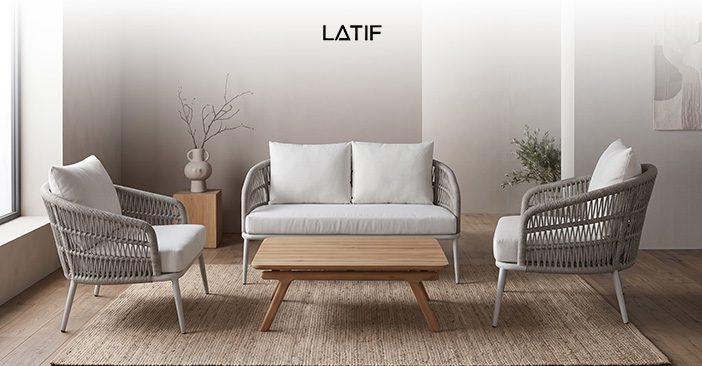
A rope-woven three-seat outdoor sofa with matching armchair and coffee table. The Oxford uses a denser, more enclosed rope weave pattern than the Kuta, creating a softer visual quality. The white rope tone on a dark aluminium frame creates a strong light-dark contrast.
Why it works: The Oxford suits outdoor spaces with a lighter, more Mediterranean or coastal design direction. The white rope reads differently from the dark-tone rope of the Kuta: it creates brightness and openness rather than graphic weight. For villa terraces with white or light-coloured architectural finishes, the Oxford integrates visually in a way that darker rope furniture does not. Moreover, the denser weave pattern creates a surface that photographs with a richness and texture that suits property marketing images.
4. Kansas Sectional
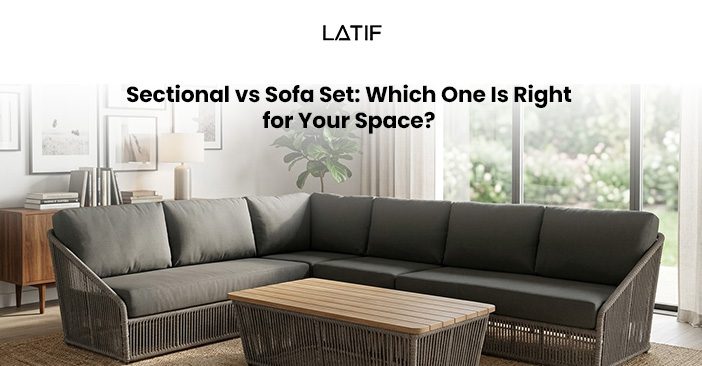
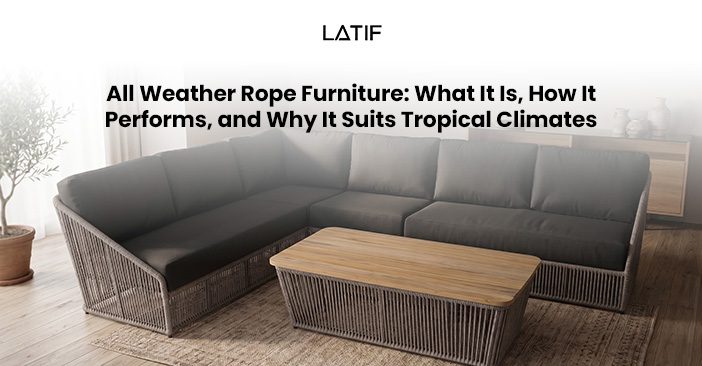
An L-shaped outdoor sectional sofa in dark rope weaving over a powder-coated aluminium frame, with a teak-top coffee table. The Kansas uses all weather rope across the full connected seating surface, creating a continuous rope texture across an L-shape configuration.
Why it works: The Kansas demonstrates the design versatility of all weather rope at sectional scale. The rope weave does not change character across the larger format, which means the piece maintains visual coherence across its full length. For large outdoor terraces and hotel pool lounge areas that need a single dominant seating piece, the Kansas delivers the capacity and presence of a sectional with the material performance of all weather rope construction. Additionally, the rope surface of a sectional-scale piece shows off the handwoven quality of the material more dramatically than a single armchair.
5. Vienna Collection
True outdoor luxury is defined by a bold interplay of light, shadow, and architectural framing. The Vienna Collection introduces an ultra-sleek, minimalist profile to premium open-air environments, serving as a sophisticated conversational layout for luxury villa verandas, private estate patios, and boutique resort decks.
The collection features a masterfully balanced low-profile silhouette, comprising deep-set armchairs, a matching two-seater sofa, and a streamlined oval coffee table. The seating structure centers on an expansive, gently curved backrest and sloped armrests wrapped entirely in a dense grid of vertical, charcoal-toned outdoor rope. This linear, open-wrapped design filters light beautifully while providing exceptional breathable support, topped with plush, crisp white weather-resistant cushions to create a striking visual contrast.
Find All Weather Rope Furniture at Latif Living
Visit either Latif Living showroom in Bali to see the full all weather rope collection across sofas, dining chairs, bar stools, and lounge pieces. Assess the rope tension, colour consistency, and frame quality in person, and discuss which pieces suit your outdoor space with their team.
Latif Living Sanur Jl. By Pass Ngurah Rai No.125 X, Sanur, Denpasar Selatan, Bali +62 811-3886-034
Latif Living Seminyak (Kerobokan) Jl. Raya Kerobokan No.132, Kerobokan, Kuta Utara, Badung, Bali +62 812-2534-9473