
You want comfortable outdoor furniture for relaxing, lounging, or soaking up the sun. You narrow it down to two options between daybed vs sun lounger. Both look appealing in catalogs. Both serve the same general purpose of giving you a place to stretch out outdoors. But they are not the same thing, and choosing the wrong one for your space can be a frustrating and expensive mistake.
This guide breaks down the daybed vs sun lounger debate clearly. You will understand the differences, know which one fits your situation, and find the right options from Latif Living’s collection.
The Core Idea Between Daybed vs Sun Lounger
Both daybeds and sun loungers exist to let you lie down outdoors. That is where the similarity ends.
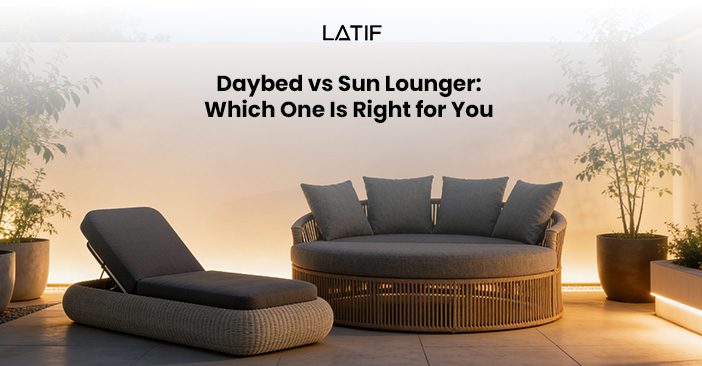
A sun lounger is a single-person reclining chair designed for outdoor use, typically beside a pool, on a terrace, or on a beach. Most have an adjustable backrest so you can sit upright, recline partially, or lie completely flat. They are built to be functional, space-efficient, and easy to move or stack.
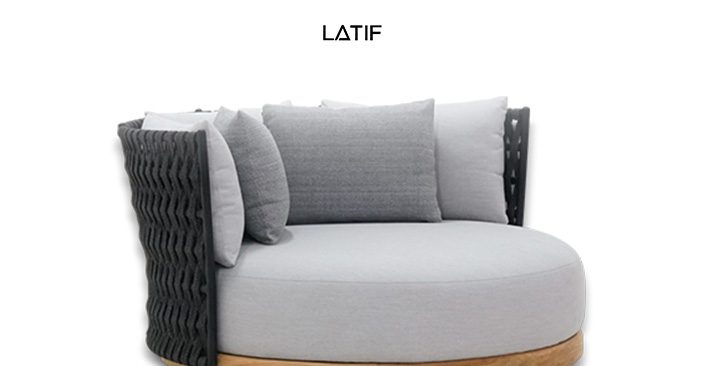
A daybed is closer to an outdoor sofa that you can also sleep on. It is wider, deeper, and more enclosed than a sun lounger. Some daybeds have a canopy or partial enclosure. They hold two people comfortably, sometimes more, and they create a defined lounge zone rather than just a single reclining seat.
The choice between them comes down to your space, your budget, how many people you need to accommodate, and what atmosphere you want to create.
Key Differences: Daybed vs Sun Lounger
Function
A sun lounger is purpose-built for individual sun bathing, poolside relaxing, or reading outdoors. Its reclining mechanism lets you adjust your position throughout the day. It is a utility piece first.
A daybed functions as a lounge, a nap spot, and a social seating option all at once. Two people can lie side by side. You can sit upright and have a conversation, or lie flat for an afternoon rest. It is more versatile in how it gets used across the day.
Capacity
A sun lounger holds one person. That is its design constraint. If you are planning for couples, families, or groups, you need multiple sun loungers, which requires more total floor space than a single daybed.
A daybed comfortably holds two adults. A larger round daybed, like an oversized nest-style piece, can fit three to four people lounging together. For social settings, a daybed offers more capacity per unit of furniture.
Size and Space Requirements
Sun loungers are narrow. A typical sun lounger runs 190 to 210 centimeters long and 60 to 75 centimeters wide. You can fit two sun loungers side by side in the space that a single daybed would occupy. This makes sun loungers far more practical for small terraces, narrow pool decks, or balconies where space is tight.
Daybeds are wide. A standard daybed runs 160 to 200 centimeters in diameter or width. Round daybeds are often 140 to 200 centimeters in diameter. They need clear space around them to look right and be accessible. A daybed placed in a cramped space loses its visual appeal entirely.
Aesthetics
Sun loungers read as active and functional. Lined up along a pool deck, they signal an outdoor fitness and leisure lifestyle. The look is clean, resort-style, and familiar.
Daybeds are a design statement. A well-placed daybed transforms an outdoor area into a retreat. It draws the eye. Can creates a focal point. It says that the space was designed for relaxation and comfort, not just utility. For villa gardens, boutique hotel terraces, and private resort-style homes, daybeds deliver a visual impact that sun loungers cannot match.
Materials
Sun loungers commonly use wicker, synthetic resin fibre over aluminium frames, sling fabric stretched over metal, or teak with sling or cushion. Most are designed to be lightweight enough to reposition easily and to dry quickly after rain or pool splashing.
Daybeds use heavier, more structural materials. Wicker and resin fibre are common for the base and enclosure. Teak frames appear frequently in premium daybeds. The cushioning is more substantial because daybeds are designed for extended comfort. Round nest-style daybeds often use deeply padded cushion bases.
Durability and Maintenance
Sun loungers in wicker or sling dry fast and require minimal maintenance. The sling fabric is open-weave, so water drains through and the piece is ready to use again quickly. Wicker and resin fibre sun loungers resist UV and moisture in good-quality brands.
Daybeds require more attention because of their larger cushions. If your daybed uses thick foam cushioning, you need either weatherproof outdoor fabric or a plan for moving cushions indoors during heavy rain. Sunbrella fabric is the standard for outdoor-grade daybed cushions. It resists mildew, fading, and moisture, but the cushions are still bulkier to manage than a sling lounger.
Price
Sun loungers start lower. A good-quality outdoor sun lounger from a reputable Bali furniture manufacturer starts at around IDR 1,900,000 to IDR 3,500,000 for wicker or resin fibre models. Higher-end teak or aluminium models with sling or cushion run from IDR 4,000,000 to IDR 8,000,000.
Daybeds sit at a higher price point because of their size, material volume, and cushioning. Entry-level round daybeds start around IDR 4,000,000 to IDR 6,000,000. Full-sized daybeds with enclosure or canopy range from IDR 7,000,000 to IDR 34,000,000 for premium canopy daybeds.
Who Should Choose a Sun Lounger
Sun loungers are the right choice in these situations.
You have a private pool with limited deck space. Pool decks need to remain walkable. Sun loungers sit narrow and parallel to the pool edge without consuming the entire terrace. You can fit 4 to 6 sun loungers in the space a single daybed would occupy.
You want individual pieces that are easy to move. Sun loungers reposition easily. You can follow the sun, rearrange for cleaning, or stack them when not in use. Many models are designed specifically for stacking.
You prioritise quick-drying performance. If your outdoor area gets regular rain or pool splash, sling sun loungers drain and dry within minutes. No cushion management is required.
You are outfitting a commercial pool area. Hotels, villas, and resorts with large pool decks use sun loungers to maximise capacity. A 20-meter pool deck can accommodate 10 to 14 sun loungers that would otherwise only fit 2 to 3 daybeds.
You are working with a lower furniture budget. Sun loungers deliver poolside comfort at a lower price per unit, which matters when outfitting a property with 20 or more lounging spots.
Who Should Choose a Daybed
Daybeds are the right choice in these situations.
You have a generous outdoor space and want a focal point. A large villa garden, a wide terrace, or a covered outdoor living area can absorb a daybed and let it define the zone. Without enough space, a daybed looks forced.
You want to create a lounge or retreat atmosphere. Boutique hotels, private villas, and high-end residences use daybeds to create a sense of arrival and luxury in their outdoor areas. A nest-style round daybed positioned in a garden or beside a pool communicates that this is a space designed for genuine relaxation.
You want to accommodate two people comfortably in one piece of furniture. Couples who want to lounge together, or families with children who want to gather, benefit from a daybed’s capacity. Two people on separate sun loungers is functional. Two people on a daybed is comfortable.
You want a piece that works for both day and evening. Daybeds with good cushioning and a partial canopy transition easily from afternoon sun to evening socialising. They hold their appeal across the full day in a way that sun loungers do not.
You are designing for a spa, wellness, or resort aesthetic. The hospitality industry uses daybeds extensively in spa terraces, pool villas, and premium suite outdoor areas. The daybed is the standard piece for creating that environment.
Tips for Choosing Between Daybed vs Sun Lounger
Measure your space first. Draw a rough floor plan and mark where the furniture will sit. Sun loungers need 80 to 100 centimeters of clearance between them and any wall or edge. Daybeds need at least 60 centimeters of clearance on all accessible sides.
Think about how many people you need to seat. For individual use or for outfitting a commercial pool deck with high capacity, sun loungers. For couples, small groups, or creating a centerpiece lounge area, daybeds.
Consider your cushion management plan. If you live in a climate with frequent rain and cannot easily move large cushions, a sling sun lounger eliminates the problem. If you can store cushions or use a covered terrace, a well-cushioned daybed is worth the extra care.
Match the furniture to your existing aesthetic. Modern, clean outdoor areas look better with sleek sling or aluminium-frame sun loungers. Tropical, resort, or bohemian outdoor areas suit round wicker daybeds, nest-style pieces, or teak-frame daybeds with deep cushioning.
Check the material quality before you buy. For outdoor use, confirm that wicker is synthetic resin fibre (not natural rattan), that aluminium is powder-coated, and that cushion fabric meets outdoor standards. FSC-certified teak is the benchmark for teak quality.
Daybed and Sun Lounger Options at Latif Living
Latif Living’s Sun Lounger and Daybed collection covers a wide range of materials, styles, and price points. Here are key options from the collection.
Sun Loungers
- Florida
A wicker sun lounger with an adjustable backrest. Practical, lightweight, and easy to reposition. Well suited for pool decks where pieces need to move frequently. - Rio
A wicker sun lounger with clean lines and a slightly elevated profile. Good balance of style and everyday usability for residential pools. - Barcelona
Wicker sun lounger with a teak wood frame base. The natural wood legs add warmth to the design. Suitable for spaces that blend natural materials. - Bahamas
A sling sun lounger with an aluminium frame and teak armrest accents. The sling seat drains and dries instantly, making this ideal for high-use pool areas. Clean, contemporary look. - Ohio
Sling lounger on a teak base. The teak frame gives it a warmer, more natural aesthetic than a full aluminium piece.
Daybeds
- Malta
Round daybed 160 centimeters in diameter with rope weaving on the exterior. Cushion is included. The cushion-included pricing makes this strong value for buyers who want a complete ready-to-use piece. - Galata
Round daybed 140 centimeters in diameter with rope weaving in black and a teak base. Premium finish. The teak base elevates it above standard wicker daybeds and gives it a luxury resort look. - Texas
A two-seat outdoor daybed sofa measuring 160 x 142 x 91 centimeters with rope weaving and a cushioned seat. Functions as both a daybed and a deep lounge sofa. Good for covered terraces where a round daybed would not suit the layout. - Sandybay
A canopied wicker daybed measuring 200 x 150 x 175 centimeters. The arched canopy provides shade without requiring a separate umbrella. Suitable for uncovered outdoor areas where sun protection is needed directly over the lounging surface. - Seminyak
A full canopy daybed measuring 210 x 210 x 210 centimeters with aluminium frame and a complete overhead canopy structure. This is the top of the collection. It creates a self-contained outdoor room. Suitable for large villa terraces, resort pool areas, and high-end hospitality projects.
Visit Our’s Showrooms
Visit Latif Living’s showrooms in Sanur or Seminyak (Kerobokan) to see the full Sun Lounger and Daybed collection in person. The team can advise on which pieces suit your space dimensions, material preferences, and project type.